

Soap Ingredients to Avoid for Allergies: A 2026 Guide
Table of Contents
- Why Your Soap Might Be Causing Your Skin Reactions
- Contact Dermatitis from Soap Symptoms: How to Tell If Your Skin Is Reacting
- The Top Soap Ingredients to Avoid for Allergies
- Essential Oils vs Fragrance Oils for Soap: Which Is Safer?
- How to Read Soap Labels for Allergens: A Practical Guide
- The Role of pH and Your Skin Barrier
- How to Patch Test Soap at Home
- Finding the Right Soap for Sensitive Skin
- Frequently Asked Questions
Last Updated: September 8, 2026
When your skin breaks out in red, itchy patches after washing, the culprit is often hiding in your soap. Understanding which soap ingredients to avoid for allergies can be the difference between calm skin and a frustrating cycle of irritation. At Pasaku Soap Company, we hand-pour small-batch artisan soaps.
Below, we break down the specific culprits, explain how to read labels like a dermatologist, and give you a practical home method for testing new products safely.
Why Your Soap Might Be Causing Your Skin Reactions
Soap causes reactions when its chemistry clashes with your skin’s natural biology. Your skin maintains a protective barrier with a slightly acidic pH, but many commercial soaps use strong alkaline surfactants that strip away natural oils. When this barrier is compromised, moisture escapes and irritants penetrate more easily, leading to dryness, redness, and inflammation.
A common mistake is assuming only heavily scented products cause issues. The cleansing agents themselves, surfactants that create lather and lift dirt, are often the primary offenders. Many sensitive individuals find that switching to a gentler cleansing method resolves symptoms they had attributed to other causes.
Contact Dermatitis from Soap Symptoms: How to Tell If Your Skin Is Reacting
Contact dermatitis from soap is not a single condition, it is an umbrella term for two distinct biological responses that require different management strategies.
Irritant Contact Dermatitis: The Chemical Burn Effect
Irritant contact dermatitis (ICD) is the more common reaction and is not a true allergy. It occurs when a soap's ingredients, typically harsh surfactants like sodium lauryl sulfate or high-pH alkalis, directly damage the stratum corneum, disrupting the lipid barrier that holds moisture in. The reaction is dose-dependent: the more concentrated the irritant and the longer the exposure, the worse the damage.
Symptoms of ICD typically include:
- Dryness and tightness that feels worse after washing
- Redness and scaling that appears within minutes to hours of contact
- A stinging or burning sensation that is often more prominent than itching
- Cracking or fissuring in severe cases, particularly on the hands
ICD is often cumulative. A soap may not bother you at first, but repeated exposure breaks down the barrier over days or weeks, eventually producing a visible rash. This is why many people report their soap "suddenly" started causing problems, the damage was building silently.
Allergic Contact Dermatitis: The Delayed Immune Response
Allergic contact dermatitis (ACD) is a true type IV hypersensitivity reaction mediated by T-cells. It requires prior sensitization: your immune system must first encounter the allergen and create memory cells. On subsequent exposures, those memory cells trigger an inflammatory cascade at the site of contact.
Because this process takes time, ACD symptoms typically appear 24 to 72 hours after exposure, not immediately. If your rash appears the same day you used a new soap, it is more likely ICD; if it appears a day or two later, ACD is more probable.
Classic ACD symptoms include:
- Intense itching that often precedes visible changes
- Raised, weeping blisters (vesicles) that may crust over
- Well-demarcated redness that spreads beyond the area of direct contact
- Swelling and warmth in the affected region
Common soap allergens that trigger ACD include preservatives like methylisothiazolinone (MIT), fragrance components such as limonene and linalool (which oxidize into potent sensitizers), and certain essential oils.
How to Tell the Difference at Home
While a dermatologist can perform patch testing to confirm ACD, you can make a preliminary assessment at home:
- Timing: Did the rash appear within hours (likely ICD) or after a day or more (likely ACD)?
- Sensation: Is burning dominant (ICD) or is itching dominant (ACD)?
- History: Have you used this product before without issue? Repeated use without problems points away from ACD, which requires prior sensitization.
The Top Soap Ingredients to Avoid for Allergies
When evaluating a label, these are the most common irritants that dermatologists recommend avoiding, especially for those with reactive skin.
Sulfates (SLS and SLES): The Harsh Surfactants
Sodium lauryl sulfate (SLS) and sodium laureth sulfate (SLES) are strong detergents used to create a rich, foamy lather. They are effective at removing oil and dirt, but they are also known to disrupt the skin barrier. For individuals with sensitive skin, sulfates can cause significant dryness and trigger contact dermatitis because they strip the skin of its natural protective oils.
Synthetic Fragrances and Phthalates
The term "fragrance" on an ingredient list can hide dozens of undisclosed chemical compounds, including phthalates, which are used to make scents last longer. Synthetic fragrance is one of the most common causes of allergic contact dermatitis. These mixtures can contain hundreds of individual chemicals, making it difficult to pinpoint the exact allergen. For sensitive individuals, fragrance-free products are almost always the safer choice.
Preservatives: MIT, Parabens, and Formaldehyde Releasers
Preservatives are necessary to prevent bacterial growth, but some are potent sensitizers. Methylisothiazolinone (MIT) is a common preservative that has seen a sharp rise in allergy rates. Parabens, while less allergenic than MIT, can still cause irritation for some. Formaldehyde releasers, such as quaternium-15, slowly release small amounts of formaldehyde over time and are a well-documented cause of allergic reactions.
Artificial Dyes and Other Irritants
Artificial colors serve no functional purpose in soap and are frequent triggers for those with skin sensitivity. These synthetic dyes can cause itching and inflammation. Additionally, look out for triclosan, an antibacterial agent that can disrupt skin flora, and various thickening agents that may not agree with your skin.
Essential Oils vs Fragrance Oils for Soap: Which Is Safer?
Fragrance oils are entirely synthetic and often contain phthalates and other undisclosed chemicals, making them a higher risk for allergic reactions. Essential oils are derived from plants and offer natural scent profiles.
However, natural does not automatically mean safe. Essential oils are potent botanical compounds that can cause cross-reactivity in those already sensitive to synthetic fragrances; citrus oils and lavender can irritate broken or highly reactive skin. The safest option for allergy-prone individuals is a completely unscented soap. If you prefer a scented product, choose one with a single, low-concentration essential oil so you can easily identify the trigger if a reaction occurs.
How to Read Soap Labels for Allergens: A Practical Guide
Reading a soap label is not about recognizing every chemical name, it is about understanding the system behind the list. In the United States, the FDA requires cosmetic ingredients to be listed using the International Nomenclature of Cosmetic Ingredients (INCI) system.
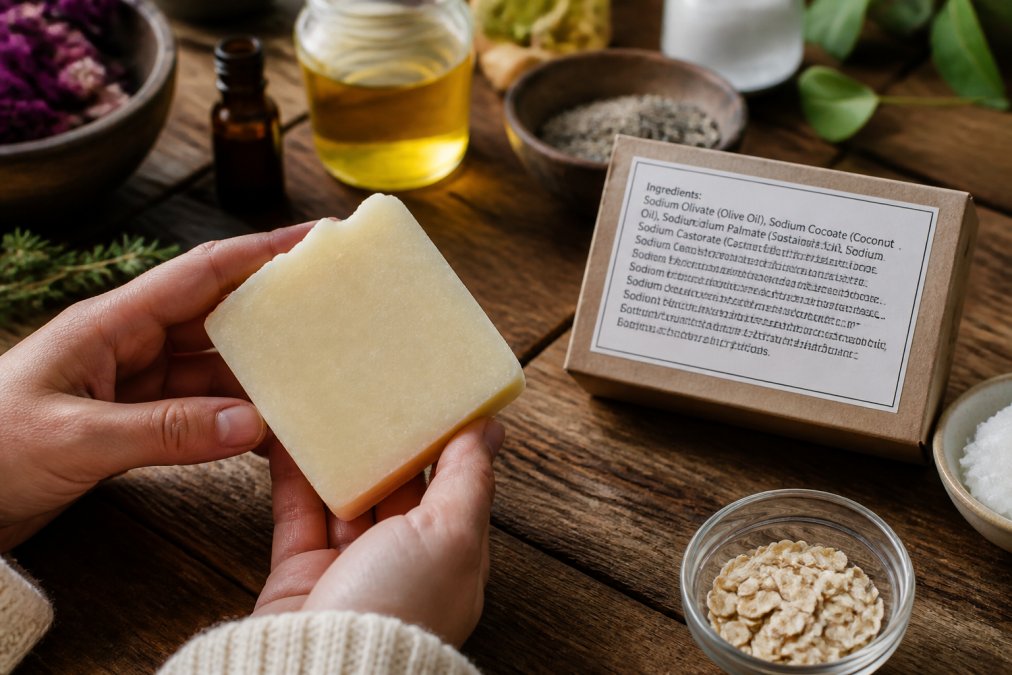
The Structure of an INCI Label
Ingredients are listed in descending order of concentration. The first three to five typically make up 80-90% of the product. If a known irritant appears in the top five, that is a red flag. If it appears near the end, its concentration is likely below 1%, which may or may not trigger a reaction depending on your sensitivity.
The "Fragrance" Loophole
Under the Fair Packaging and Labeling Act, the FDA does not require manufacturers to disclose individual components of a fragrance mixture. The single term "fragrance" or "parfum" can legally represent dozens or even hundreds of undisclosed chemicals, a trade secret protection that creates a significant blind spot for allergy sufferers. A product labeled "fragrance-free" is your safest bet, but you must also check for masking agents.
The "Unscented" Trap
"Unscented" does not mean "no fragrance chemicals." It means the product has no perceptible scent. Manufacturers often add masking fragrances, low concentrations of scented compounds, to neutralize raw ingredient odors. These are still fragrance chemicals and can still trigger allergies. Always check the ingredient list for "fragrance" even if the front label says "unscented."
Botanical Extracts: The Hidden Irritants
A product can be genuinely fragrance-free yet still contain botanical extracts that act as irritants or allergens. Ingredients like chamomile, calendula, or citrus peel extracts are added for their skin-soothing marketing appeal, but they are biologically active compounds. For someone with a plant allergy or highly reactive skin, these "natural" additions can be just as problematic as synthetic fragrances. The FDA guidance on cosmetic labeling requires all ingredients to be listed, but it does not require safety testing for individual botanical components.
Practical Label-Reading Protocol
Follow this checklist every time you evaluate a new soap:
- Count the ingredients. Fewer than ten is a good sign. More than twenty increases the probability of hidden irritants.
- Scan the top five. These are the workhorses of the formula. Look for sulfates (sodium lauryl sulfate, sodium laureth sulfate), high-pH alkalis (sodium hydroxide, potassium hydroxide in bar soaps), or synthetic detergents (cocamidopropyl betaine).
- Check for the "fragrance" word. If present, put the product down unless you have confirmed tolerance.
- Look for preservatives. In liquid soaps, methylisothiazolinone (MIT), methylchloroisothiazolinone (MCI), and formaldehyde releasers (quaternium-15, DMDM hydantoin) are common sensitizers. Bar soaps with low water content often do not require preservatives, which is one reason they can be gentler.
- Beware of "natural" fragrance claims. Essential oils like lavender, eucalyptus, and citrus are natural, but they contain allergenic terpenes (linalool, limonene) that oxidize and become more sensitizing over time.
The 10-Ingredient Rule
A practical heuristic used by many dermatology practitioners is the "10-ingredient rule": if a product has more than ten ingredients, the probability of containing a hidden allergen increases significantly. Short ingredient lists are easier to evaluate, easier to troubleshoot, and less likely to contain undisclosed fragrance components.
The Role of pH and Your Skin Barrier
Your skin’s surface is naturally acidic, with a pH around 5.5, which helps maintain the protective acid mantle that keeps harmful bacteria out and moisture in. Many traditional soaps are highly alkaline, with a pH of 9 or higher, disrupting this mantle and leaving skin vulnerable to irritation and dehydration.
A soap that respects your skin barrier is formulated to be pH-balanced. This is where the difference between true soap and synthetic detergent bars becomes important. Many commercial "beauty bars" are actually detergents designed to be less alkaline than traditional soap. For a natural option, look for plant-based soaps that are formulated to be gentle. The National Eczema Association emphasizes that maintaining skin barrier function is crucial for managing sensitive and eczema-prone skin, as a healthy barrier prevents irritants from penetrating deeper layers.
How to Patch Test Soap at Home
Before using a new soap on your entire body, perform a patch test to see how your skin reacts.
- Wash and dry a small area of skin on your inner forearm.
- Apply a small amount of the soap’s lather to the area.
- Leave it on for 24 hours without washing it off.
- Cover the area with a bandage to prevent rubbing.
- Check the area after 24 hours for any redness, itching, or swelling.
If you notice any reaction, do not use the soap on your body. If no reaction occurs, the soap is likely safe for broader use, but start with your hands before progressing to your face or full body.
Finding the Right Soap for Sensitive Skin
The best approach for sensitive skin is to minimize your exposure to potential allergens entirely. By focusing on soaps with short, plant-based ingredient lists and no synthetic additives, you give your skin the best chance to heal and stay calm. For those seeking a predictable, gentle formula, our own The Alabaster | Unscented Plant-Based Artisan Soap is designed with this exact principle in mind.

When you find a soap that works, stick with it. Consistency is key to maintaining a healthy skin barrier. Many individuals also find that using a moisturizer immediately after washing helps lock in hydration and further protects the skin. The FDA guidance on cosmetic labeling requires all ingredients to be listed on the packaging, so you always have the information you need to make an informed choice. By becoming a diligent label reader and avoiding the soap ingredients to avoid for allergies, you can finally break the cycle of irritation.
Frequently Asked Questions
What kind of soap is best for people allergic to soap?
The best soap for people with allergies is one that is fragrance-free, dye-free, and free of harsh surfactants like SLS. Look for simple, plant-based formulas with a short ingredient list. Unscented soaps that use saponified oils like olive, coconut, or shea butter are often well-tolerated. Always check the label for hidden irritants like essential oils if you have extreme sensitivity, and consider patch testing a new bar before using it on your whole body.
Are synthetic fragrances the primary cause of soap allergies?
Synthetic fragrances are among the most common triggers for allergic contact dermatitis from soap. A fragrance mixture can contain hundreds of individual chemicals, many of which are known skin sensitizers. However, they are not the only cause. Preservatives like methylisothiazolinone (MIT) and formaldehyde releasers are also frequent culprits. Even natural essential oils can cause reactions in some people, which is why identifying the specific irritant through patch testing is important.
What is the difference between fragrance oils and essential oils for sensitive skin?
Fragrance oils are synthetic mixtures designed to mimic a scent, and they often contain phthalates and other chemicals that can trigger allergies. Essential oils are natural extracts from plants, but they are still potent and can cause contact dermatitis, especially citrus and floral oils. For sensitive skin, both can be problematic. Truly fragrance-free soaps, which contain neither, are the safest choice for anyone with a history of skin reactions.
How can I tell if my soap is causing contact dermatitis?
Contact dermatitis from soap symptoms typically appear within hours or days after use. You may notice redness, itching, burning, or a dry, flaky rash in the areas where the soap touched your skin. In more severe cases, small blisters or hives can develop. If symptoms improve when you stop using the soap and return when you start again, it is a strong sign the soap is the culprit. A dermatologist can confirm with a patch test.
How does the FDA regulate allergens in soaps and cosmetics?
The FDA regulates cosmetics under the Federal Food, Drug, and Cosmetic Act. They do not require pre-market approval for most ingredients, but they can take action against products that are adulterated or misbranded. The FDA does require ingredient labeling, which helps consumers avoid allergens. However, there are loopholes, such as the ability to simply list 'fragrance' without disclosing the individual components, which makes label reading challenging.
Choosing the right soap for reactive skin requires diligence, but the reward is a calm, comfortable complexion. Most reactions stem from a handful of harsh surfactants, synthetic scents, and preservatives that are easy to identify on a label. We believe that hand-poured, small-batch production offers a level of care and ingredient transparency that mass-produced bars cannot match. Get started with Pasaku Soap Company and experience a bar that prioritizes your skin’s health with every wash.