

Best Natural Soap for Sensitive Skin
Table of Contents
- Why Natural Soap Matters for Sensitive Skin
- Key Ingredients to Look for in Natural Soap
- Ingredients to Avoid in Soap for Sensitive Skin
- Natural Soap for Eczema and Reactive Skin
- How to Choose Natural Soap for Sensitive Skin
- Top Natural Soap Recommendations for Sensitive Skin
- Frequently Asked Questions
Why Natural Soap Matters for Sensitive Skin
Sensitive skin demands a different approach to cleansing than standard formulations offer. Conventional commercial soaps strip away the lipid barrier that protects delicate skin, relying on harsh synthetic surfactants and sulfates that trigger inflammation, redness, and itching (peer-reviewed research). Natural soap preserves the glycerin naturally produced during saponification, a benefit most drugstore bars remove to cut costs.
A truly gentle natural soap for sensitive skin should cleanse without disrupting your skin's pH balance, maintain moisture, and avoid triggering the inflammatory cascade that leaves your face red, tight, or itchy.
Key Ingredients to Look for in Natural Soap
Not all natural soaps are created equal. Understanding what to look for separates effective formulations from marketing-driven products that claim "natural" without delivering results.
Plant-Based Oils and Emollients
Plant-based oils form the foundation of quality natural soap for sensitive skin. Shea butter contains fatty acids and vitamins that reinforce the skin barrier and reduce inflammation. Olive oil contributes squalane, a lipid naturally found in human skin that helps restore hydration without leaving a greasy residue. Coconut oil offers antimicrobial properties and creates a creamy lather, essential for soaps designed for hard water areas. Jojoba oil closely mimics the skin's natural sebum composition, making it particularly well-tolerated by sensitive skin types.
The best natural soap for sensitive skin combines these oils in proportions that balance cleansing power with moisturizing benefit. A well-formulated bar should leave your skin feeling clean and hydrated, never tight or squeaky.
Moisturizing Additives and pH Balance
Glycerin acts as a humectant, drawing moisture from the air into your skin. Kaolin clay provides gentle exfoliation and oil control without harshness. White kaolin specifically offers a silky slip that makes the bar feel luxurious while maintaining its gentle profile.
pH balance is critical and often overlooked. Healthy skin maintains a pH between 4.5 and 5.5, slightly acidic (the American Academy of Dermatology). Most commercial soaps sit at pH 9-10, which disrupts the acid mantle and triggers irritation. Natural soap formulated with proper oil ratios typically lands between 8.5 and 9, closer to skin's natural state than conventional alternatives.
Hard water complicates the equation for many users. Natural soaps formulated with specific oil blends, particularly those using coconut oil and castor oil in calculated ratios, create stable lather even in challenging water conditions. This matters because poor lather often leads people to use more soap, which increases irritation risk.
Ingredients to Avoid in Soap for Sensitive Skin
Synthetic surfactants like sodium lauryl sulfate (SLS) and sodium laureth sulfate (SLES) strip the skin barrier aggressively. Parabens, used as preservatives, accumulate in skin tissue and disrupt hormone signaling. Phthalates, often hidden in "fragrance" labels, cause endocrine disruption and skin sensitization.
Essential oils, while natural, can trigger reactions in sensitive skin. Lavender, peppermint, and citrus oils are common irritants for reactive skin types. Fragrance compounds can activate mast cells and trigger histamine release, causing itching and redness. Artificial colorants serve no skincare function and introduce chemical risk. Sulfates strip moisture and disrupt the microbiome.
The best natural soap for sensitive skin avoids this entire category of additives, relying instead on the natural preservative power of certain oils and the stability of cold-processed formulations.
Natural Soap for Eczema and Reactive Skin
Eczema and other reactive skin conditions demand a specialized approach. These conditions involve compromised skin barriers, impaired lipid production, and heightened inflammatory responses. A soap formulated specifically for reactive skin must cleanse without disrupting the barrier, provide intensive moisturizing support, and avoid any ingredient known to trigger flare-ups.
Colloidal oatmeal is particularly valuable for eczema. It contains avenanthramides, compounds with anti-inflammatory and anti-itch properties (peer-reviewed research). When incorporated into natural soap, oatmeal provides gentle exfoliation while delivering soothing benefits.
Goat milk is another ingredient specifically beneficial for eczema-prone skin. It contains alpha-hydroxy acids that gently exfoliate dead skin without harshness, and fatty acids that support barrier repair. The pH of goat milk is closer to skin's natural pH than cow's milk, making it more compatible with sensitive skin biology.
For reactive skin conditions, the best natural soap should be fragrance-free, free of all synthetic additives, and formulated with ingredients proven to reduce inflammation and support barrier function. Introduce new soaps gradually and monitor your skin's response over a full week before committing to regular use.
How to Choose Natural Soap for Sensitive Skin
Selecting the right product requires a systematic approach. Many people waste money and frustration by choosing based on packaging or marketing claims rather than ingredient compatibility.
Identifying Your Skin Type
Atopic-prone skin (eczema, dermatitis) requires fragrance-free formulations with intensive moisturizing support. Contact-sensitive skin reacts to specific ingredients, often fragrances or preservatives; a minimalist formulation with fewer ingredients is usually safer. Reactive skin with inflammation benefits from soothing ingredients like kaolin clay. Dry, sensitive skin needs maximum moisturizing support from shea butter and olive oil. Hard water sensitivity requires a natural soap formulated to create stable lather and avoid mineral residue buildup.
Testing for Compatibility
Never commit to a full-size bar without testing. Conduct a patch test first by applying a small amount of lather to your inner arm or behind your ear. Wait 24 hours. If no redness, itching, or irritation develops, proceed to a full facial wash. Use the soap once daily for three to five days, monitoring your skin's response.

Water temperature affects results. Hot water opens pores and can increase irritation risk with sensitive skin. Use lukewarm water when testing new soaps.
Top Natural Soap Recommendations for Sensitive Skin
1. The Alabaster: Fragrance-Free Plant-Based Option
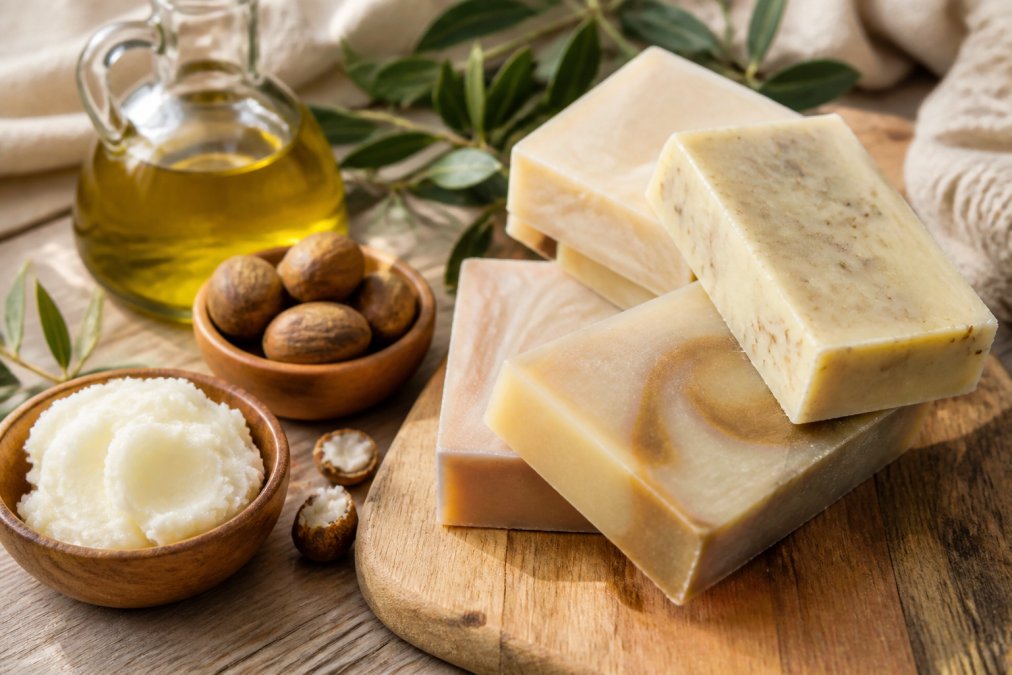
The Alabaster from Pasaku Soap Company is purpose-built for sensitive skin that needs absolute simplicity. This fragrance-free bar contains zero essential oils, zero synthetic fragrances, and zero unnecessary additives. It's cold-processed and hand-poured, preserving the natural glycerin that commercial soaps strip away.

The formulation centers on shea butter and olive oil, chosen specifically for skin barrier support. White kaolin clay adds gentle slip without harsh exfoliation. The result is a bar that cleanses effectively while leaving skin hydrated and balanced.
Pros:
- Truly fragrance-free with no essential oils
- Minimal ingredient list reduces reaction risk
- Hand-poured cold-process retains natural glycerin
- Creates silky lather even in hard water
- Priced at $9.00 per bar
Cons:
- Fragrance-free means no scent appeal
- Single formulation, no variety for different skin zones
Best For: People with severe contact sensitivity, those prone to fragrance reactions, and anyone seeking absolute simplicity.
2. The Soap Trio: Customizable Artisan Collection
The Soap Trio from Pasaku Soap Company addresses a common frustration: one formulation rarely works for every skin zone. This bundle lets you select any three bars from the full collection, allowing you to build a personalized routine. Cold-processed and hand-poured like all Pasaku offerings, each bar is cured for a minimum of six weeks.
This is the best natural soap for sensitive skin when you want to experiment with different formulations without committing to full-size bars of each. The bundle pricing at $25.00 provides savings compared to purchasing individual bars.
Pros:
- Mix-and-match flexibility for different skin needs
- Curated selection of proven formulations
- Minimum six-week cure ensures stability
- Hand-poured quality at bundle savings
Cons:
- Requires decision-making about which bars to select
- Bundle pricing requires purchasing three bars simultaneously
Best For: People exploring which formulation works best for their specific sensitivity profile and those with multiple skin concerns.
3. The Premier Collection: Complete Routine Solution
The Premier Collection from Pasaku Soap Company includes all four signature formulations paired with a handcrafted ceramic soap dish. This is the best natural soap for sensitive skin when you want a complete system designed to work together as a routine.
The hand-built ceramic dish from Gravesco studio isn't merely decorative; proper soap storage extends bar life and prevents the mushy degradation that occurs with poor drainage. Presented in a custom-stamped apothecary box, this collection functions as both a skincare solution and a premium gift.
At $45.00, the Premier Collection includes an instant $9 savings compared to purchasing components separately.
Pros:
- Complete collection covers all sensitivity profiles
- Handcrafted ceramic dish improves soap longevity
- Premium presentation suitable for gifting
- Includes instant savings
- Four formulations allow rotating daily
Cons:
- Higher initial investment than single bars
- Requires space to store four bars plus dish
Best For: People ready to commit to a complete natural soap routine, those gifting premium skincare sets, and anyone wanting to optimize their cleansing ritual.
Choosing the best natural soap for sensitive skin is a personal process guided by your specific sensitivities and skin conditions. Start with patch testing and introduce one new soap gradually, observing your skin's response over five to seven days. Keep notes on what works and what doesn't.
The investment in quality natural soap pays dividends through reduced irritation, improved hydration, and the confidence that comes from using products aligned with your skin's actual biology. When you find the right formulation, your skin will feel cleaner, more hydrated, and genuinely comfortable.
Frequently Asked Questions
Q: What kind of soap is best for very sensitive and itchy skin?
Fragrance-free, cold-processed natural soaps with high glycerin content work best for sensitive, itchy skin. Look for bars containing shea butter, olive oil, and gentle mineral clays like kaolin. Avoid sulfates, parabens, and synthetic surfactants, which strip the skin barrier and trigger irritation. Hand-poured artisan soaps preserve more natural glycerin than commercial alternatives, providing superior moisturizing and soothing properties for reactive skin.
Q: Are natural soaps better for eczema-prone skin?
Yes, natural soaps formulated without harsh chemicals are gentler on eczema-prone skin. Cold-processed soaps retain their natural glycerin, which strengthens the skin barrier and reduces inflammation. Plant-based ingredients like shea butter and botanical extracts provide emollient and humectant properties that lock in moisture. However, even natural soaps can trigger flare-ups if they contain essential oils or fragrance; fragrance-free options are safest for eczema-prone individuals.
Q: What ingredients should I avoid in soap for sensitive skin?
Avoid synthetic surfactants, sulfates, parabens, phthalates, and artificial fragrances, which compromise the skin barrier and cause irritation. Harsh chemicals like sodium lauryl sulfate (SLS) strip natural oils and disrupt pH balance. Even some essential oils can irritate sensitive skin. Cold-processed, plant-based soaps avoid these additives, preserving the lipid barrier and maintaining a balanced pH, critical for preventing redness, dryness, and inflammation in reactive skin.
Q: How do I know if a natural soap is truly fragrance-free?
True fragrance-free soaps contain no essential oils, synthetic fragrances, or fragrance compounds. Check the ingredient list for terms like 'fragrance,' 'parfum,' or essential oil names. Some soaps labeled 'unscented' still contain masking fragrances. Artisan soaps like The Alabaster are formulated with white kaolin clay and plant-based ingredients that smell naturally neutral, no added scent compounds. If you're highly sensitive, patch-test first and verify the soap's curing method and ingredient sourcing.
This article was written using GrandRanker