

Scented vs Unscented Artisan Soap for Gifts
Last Updated: November 6, 2026
Quick Summary
Unscented artisan soap is the safer gift when you don't know the recipient's skin or scent preferences, while scented bars make a more memorable gift for someone whose taste you know. For a gift that works for almost anyone, build a trio with one unscented bar, one calming scented bar, and one bold or exfoliating bar.
- Fragrance-free means no fragrance ingredients were added, including masking agents; unscented is looser and may contain a masking fragrance.
- Fragrance is one of the most common causes of contact reactions in skincare, per American Academy of Dermatology guidance.
- Match scent families to routine: citrus for morning people, lavender and woodsy notes for evening routines.
- A two-bar set with one fragrance-free and one mild scented bar suits a coworker or host.
- Pair a bright citrus bar with a calming lavender bar so the recipient can match scent to mood.
Table of Contents
- Scented vs Unscented Artisan Soap for Gifts: The Quick Comparison
- What Scented and Unscented Really Mean on a Soap Label
- Why Fragrance-Free Artisan Soap Belongs in Every Gift Shortlist
- How to Choose a Soap Scent for Someone Else
- The Best Handmade Soap Scents for Gifts, Bar by Bar
- Skin Sensitivity, Allergies, and What to Disclose
- Gift Sets, Presentation, and Getting the Order Right
- Build a Gift Trio That Covers Scented and Unscented
- Frequently Asked Questions
Scented vs Unscented Artisan Soap for Gifts: The Quick Comparison
The safest gift in the soap aisle is the bar with no scent at all. That sounds like a strange thing for a soap maker to say, but it's the truth we've learned after years of hand-pouring bars in small batches.
Here's the short version. Fragrance-free bars suit reactive skin, scent-sensitive noses, and anyone whose preferences you can't verify. Scented bars, when they use essential oils rather than synthetic fragrance, make a more memorable gift for someone whose taste you actually know.
Below, we'll break down what the labels really mean, how to read a scent family against a personality, and the exact trio we'd build for a gift that has to work.
| Gift Scenario | Best Choice | Why |
|---|---|---|
| Recipient has sensitive skin | Unscented | No fragrance to trigger irritation |
| You don't know their preferences | Unscented | Safe, neutral, still feels premium |
| Close friend with known taste | Scented | Personal and memorable |
| Coworker or acquaintance | Unscented | Professional, no assumptions |
| Spa-lover, relaxation focus | Scented, lavender | Calming scent profile |
| Gift set for a household | Both | Covers every skin type |
What Scented and Unscented Really Mean on a Soap Label
Scented soap contains an added fragrance, whether from essential oils or fragrance oils. Unscented soap has no added fragrance at all, though it may still carry a faint natural smell from its base oils. The gap between those two definitions is where most gift-buying mistakes happen.
Fragrance-Free vs Unscented: Not the Same Thing
Fragrance-free means no fragrance ingredients were added, including masking agents used to cover the smell of raw materials. Unscented is looser. A bar labeled unscented can legally contain a masking fragrance that neutralizes the natural odor of the soap base without leaving a noticeable scent.
That distinction matters for a gift. If the recipient reacts to fragrance, "unscented" on a label isn't a guarantee. Look for "fragrance-free" or a full ingredient list you can actually read. The FDA guidance on cosmetic labeling requires ingredients to be listed, so a maker hiding behind vague terms is a red flag.
Essential Oils vs Fragrance Oils
Essential oils are distilled from plants. Fragrance oils are lab-built scent compounds, and they can be synthetic or nature-identical. Many people with scent sensitivity tolerate essential oils better, but not always. Some essential oils, like tea tree or eucalyptus, are potent enough to bother reactive skin on their own.
The practical takeaway: neither option is automatically gentler. Ask what the scent comes from, and match it to the person.
Why Fragrance-Free Artisan Soap Belongs in Every Gift Shortlist
Most gift guides skip the unscented bar because it photographs as boring. That's a mistake.
Think about who ends up with a scented gift they can't use: the friend with eczema, the coworker with migraines, the parent whose skin has turned reactive with age.
Our unscented pick is The Alabaster, a fragrance-free, plant-based bar built on shea butter and olive oil with white kaolin clay for a creamy lather.

American Academy of Dermatology guidance on sensitive skin points out that fragrance is one of the most common causes of contact reactions in skincare. That single fact should shape how you gift soap.
How to Choose a Soap Scent for Someone Else
Choosing a soap scent for someone else starts with what you actually know about them, not what smells good to you. Most people shop their own nose and get it wrong. The recipient's routine, sensitivities, and personality are the real inputs.
Work through three questions before you buy:
- Do they have known skin reactions? If yes, go unscented and stop there.
- What scents already live in their home? Candles, lotions, and laundry detergent tell you what they tolerate.
- When do they shower? Morning people tend toward citrus and eucalyptus. Evening routines suit lavender and woodsy notes.
Reading Scent Families Against Personality and Routine
Scent families are the fastest shortcut. Match the family to the person, not the season.
- Citrus and bright: morning people, high-energy personalities, anyone who likes a wake-up jolt. The Dusk leans here with orange and bergamot.
- Herbal and green: gym-goers, outdoor types, people who want a clean reset. Eucalyptus and tea tree fit.
- Floral and soft: evening routines, wind-down personalities, lavender lovers.
- Woodsy and earthy: grounded, understated tastes. Cedarwood and charcoal suit them.
When in doubt, choose the subtler scent. A mild bar that's slightly off is forgivable. An overpowering one gets regifted.
The Best Handmade Soap Scents for Gifts, Bar by Bar
The best handmade soap scents for gifts are the ones you can describe in a single sentence and the recipient can picture instantly. Vague "fresh" or "clean" labels tell a gift-giver nothing.
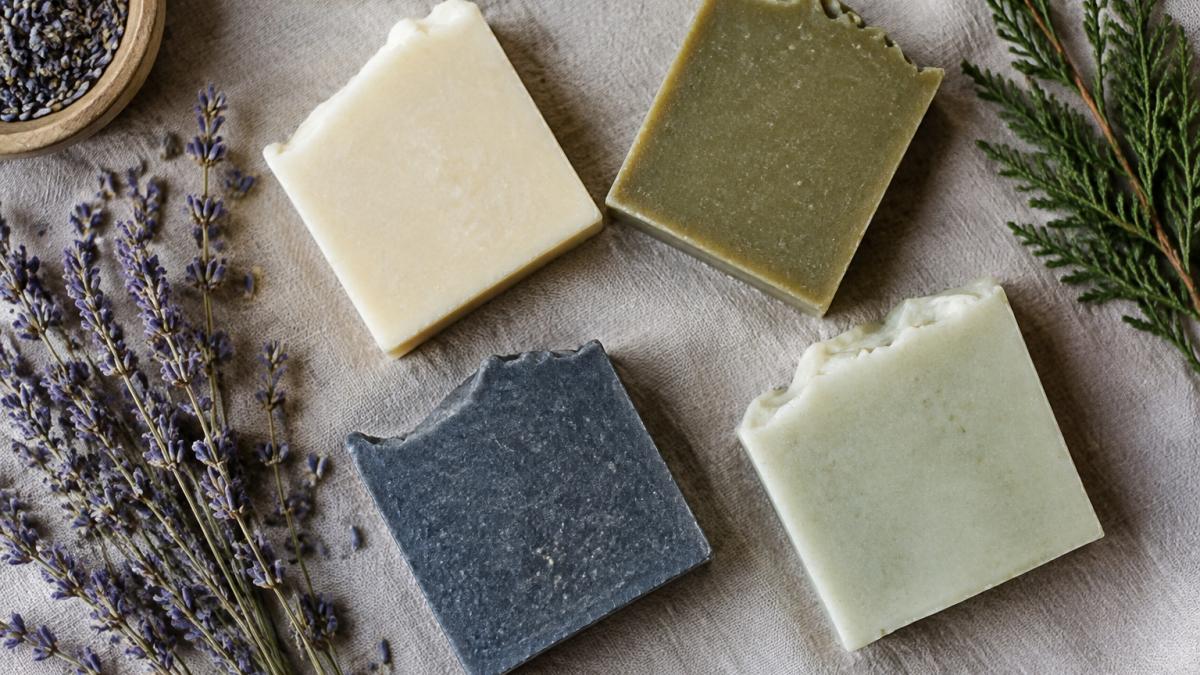
Here's how our scented bars break down for gifting.
The Dusk pairs orange, bergamot, and lavender for an evening wind-down bar. It's the safest scented gift for someone whose taste you know but whose skin isn't reactive. See The Dusk.

The Grove brings eucalyptus, tea tree, and lavender with a triple-clay blend.
The Ash is the bold choice: activated charcoal, volcanic pumice, cedarwood, and orange peel. It is a high-grit exfoliating bar. See The Ash.
The Alabaster | Unscented Plant-Based Artisan Soap →

Best for: the recipient whose preferences you know well. Skip if: you're guessing, or their skin is reactive.
Skin Sensitivity, Allergies, and What to Disclose
Skin sensitivity is the single biggest reason a soap gift fails, and fragrance, whether synthetic or essential oil, is the usual culprit.
Read the ingredient list, not the front of the label. A bar marked "unscented" can still contain a masking fragrance that neutralizes the natural odor of the soap base. If the scent comes from essential oils, the label should name them (for example, lavender oil or bergamot oil) rather than hiding behind "natural fragrance." A maker who will not list ingredients is a red flag, and the FDA guidance on cosmetic labeling requires ingredients to be declared, so a readable list is a reasonable expectation.
Distinguish the three scent states. Fragrance-free means no fragrance ingredients were added, including masking agents. Unscented is looser and may include a masking fragrance. Scented means an added fragrance, which can be essential oils, fragrance oils, or a blend. For a gift, the practical question is not which term sounds safest but which one the recipient's skin has tolerated before.
Natural does not mean non-irritating. Some essential oils, like tea tree or eucalyptus, are potent enough to bother reactive skin on their own. The American Academy of Dermatology guidance on sensitive skin notes that fragrance is one of the most common causes of contact reactions in skincare, and that applies to natural fragrances as well as synthetic ones.
Disclose what you can, in plain language. If you are giving a scented bar, tell the recipient what is in it: "This one has lavender and bergamot essential oils" gives them the information to decide.
Unscented is not a guarantee for every recipient. A fragrance-free bar avoids added fragrance, but it can still contain other ingredients a person reacts to, such as certain oils, clays, or exfoliants.
For a deeper look at matching bars to reactive skin, read our guide to the best natural soap for sensitive skin.
Gift Sets, Presentation, and Getting the Order Right
Packaging signals value before the recipient ever opens the soap. A single bar wrapped in paper with a paper band and a handwritten note reads as a gift.
Personalization is the cheapest upgrade you can make. A gift note that names the scent and explains why you chose it ("fragrance-free for sensitive skin" or "lavender for your evening routine") does two things: it shows you paid attention, and it gives the recipient the information to decide whether the bar suits them. If the maker offers a choice of scents within a set, use it to match the recipient rather than defaulting to the bestseller.
Scent variety inside a set needs a logic. Pair a bright citrus bar with a calming lavender bar so the recipient can match scent to mood or time of day.
Order timing and storage affect what arrives. If you are buying early, keep the set boxed and dry rather than displaying it in a steamy bathroom.
Our curated gift sets and bundles let you mix scents, including an unscented bar, so the recipient has options.
Build a Gift Trio That Covers Scented and Unscented
The trio that works for almost anyone: one unscented bar, one calming scented bar, and one bold or exfoliating bar. That combination covers reactive skin, relaxation, and someone who wants a scrub.
Our The Soap Trio does exactly this. Pick any three bars, and you get an automatic bundle savings.
The challenge with soap gifting isn't finding a nice bar. It's matching the bar to a person you can't fully read. Build the trio, include the unscented option, and let the recipient decide what their skin wants.
Get started with Pasaku Soap Company and build a gift set with hand-poured, small-batch bars.
Frequently Asked Questions
Is it okay to give soap as a gift?
Yes, and artisan soap works especially well because it reads as a considered everyday luxury rather than a generic filler gift. The catch is picking the right bar. If you do not know the recipient's skin type or scent preferences, an unscented bar such as The Alabaster is the safer choice, or build a set that pairs one scented bar with one fragrance-free bar so they can decide. Avoid strongly perfumed bars for anyone you know has reactive skin.
What is the difference between unscented and fragrance-free soap?
Fragrance-free means no fragrance ingredients were added at all. Unscented can be looser: some makers add masking fragrance to cover the natural smell of the base oils, so the bar still contains a scent ingredient even though it smells like nothing. When you shop, read the ingredient list rather than the front label. A bar described as fragrance-free or neutral, with no fragrance or parfum listed, is the one to choose for a sensitive recipient.
Is scented or unscented soap better for sensitive skin?
Unscented and fragrance-free bars are the lower-risk choice for sensitive skin, because added fragrance is a common trigger for irritation and allergic reaction. That does not mean every scented bar is off limits. Essential oil blends can still bother reactive skin, so patch testing matters. For a gift, pair a fragrance-free bar with a note explaining why you chose it, and let the recipient decide whether to try a scented bar later.
How do you choose a soap scent for someone else?
Work from what they already use. Notice whether their home leans floral, herbal, woodsy, or citrus, and whether they wear perfume. Then match a scent family: lavender and bergamot for someone who likes calm evening routines, eucalyptus and tea tree for a spa-leaning friend, cedarwood for someone who prefers earthy, grounding scents. Keep it subtle. A strong or overpowering bar is harder to gift than a balanced one, and a trio lets them compare and select a favorite.
What are the best handmade soap scents to give as a gift?
The Dusk pairs orange, bergamot, and lavender. The Grove combines eucalyptus, tea tree, and lavender. The Ash brings cedarwood and orange peel. If you are unsure, gift a trio so the recipient can choose.
Soap is a small gift that says a lot about how well you know someone. Choose unscented when you're unsure, scented when you're certain, and a mix when you want to cover both. At Pasaku Soap Company, every bar is hand-poured in small batches with plant-based oils, so the gift is as considered as the person you're giving it to. Build a trio, include a fragrance-free bar, and give something that actually gets used.
