

How to Identify Hidden Irritants in Bar Soap
Quick Summary
Hidden irritants in bar soap are ingredients that can cause itching, redness or dryness but are not obvious from the front label. Check the full back-of-pack ingredient list line by line, since fragrance, dyes, essential oils and preservatives often sit further down.
- Fragrance may appear as one word covering many chemicals.
- Essential oils labeled natural can still cause contact irritation.
- Words like natural and hypoallergenic do not guarantee a gentle bar.
- Test one product at a time to identify a specific trigger.
Table of Contents
- Why Bar Soap Labels Hide Irritants
- Reading the Ingredient List Line by Line
- Bar Soap Ingredients to Avoid If You Have Sensitive Skin
- Irritation or Allergy? Telling the Difference at Home
- Testing One Variable at a Time
- Soap Allergy Treatment and How Long a Reaction Lasts
- Choosing Your Next Bar Soap Based on Your Label Check
- Frequently Asked Questions
Why Bar Soap Labels Hide Irritants
Last Updated: November 21, 2026
Most people who react to a bar of soap blame the brand, switch to another "natural" bar, and react again.
Here is the core problem.
Labels also use marketing words that sound reassuring but promise nothing specific. "Natural," "plant-based," "hypoallergenic" and "unscented" are not regulated the way a medical claim is.
- Fragrance may be one word covering many chemicals
- Small amounts of dyes and preservatives can still irritate
- "Natural" and "hypoallergenic" do not guarantee a gentle bar
So the goal is not to trust a front label. It is to read the back, one line at a time.
Reading the Ingredient List Line by Line
Ingredients are generally listed in descending order of predominance, so hidden irritants are often found further down the list (the FDA). That misses surfactants, preservatives and fragrance further down the list. FDA guidance on cosmetic ingredient labeling
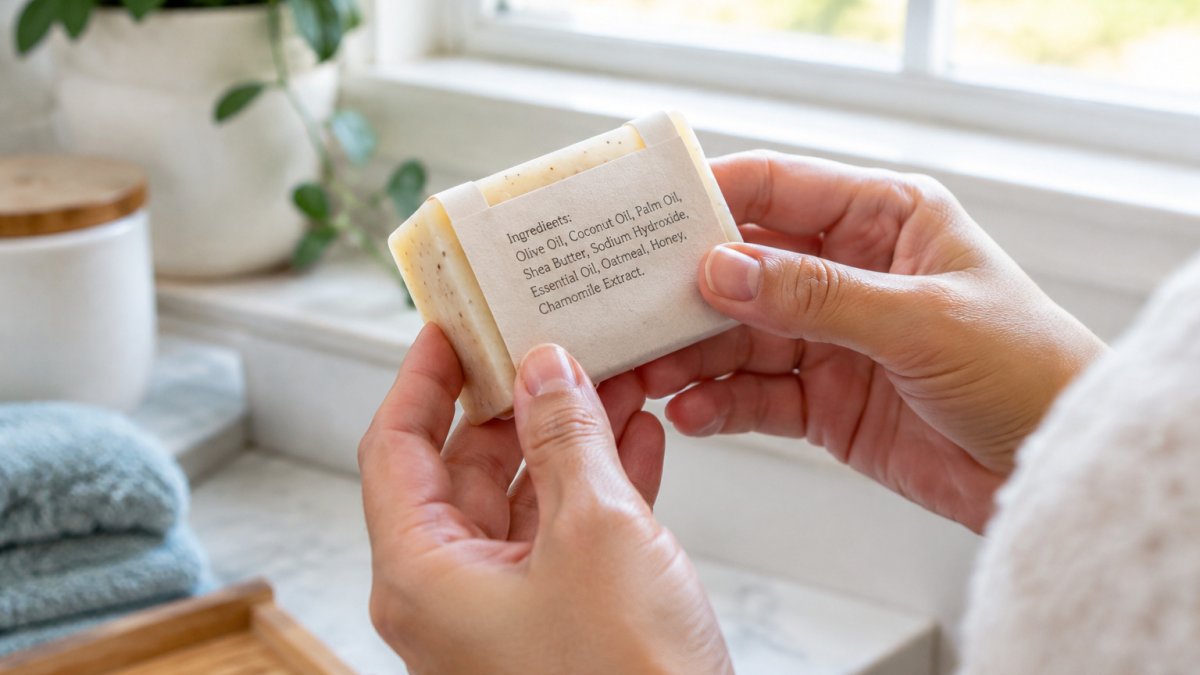
Use this simple method for each bar you check:
- Find the full ingredient list, usually printed on the wrapper or box.
- Write down every item, including the ones in small type.
- Mark any item that is a fragrance, essential oil, dye or preservative.
- Look up the marked items you do not recognize.
- Compare the list against your own history of reactions.
Essential oils deserve extra attention. An oil listed as "natural" can still cause contact irritation, especially citrus and mint oils. A label that says "fragrance-free" should still be checked for "parfum" or masking fragrances hidden in the list.
A Bar-Soap Label Glossary: Names That Hide in Plain Sight
The same irritant can appear under several names. Use this glossary to translate what you see on a wrapper into the ingredient family it belongs to; the goal is to recognize the families that matter for reactive skin, not to memorize every chemical.
- Fragrance and perfume: Look for "fragrance," "parfum," "aroma," and "essential oil blend." A single word can stand in for a blend of dozens of components, and the individual components are not required to be listed separately.
- Essential oils: Citrus oils (limonene, linalool, citral, bergamot), mint oils (menthol, peppermint), and spice oils (cinnamal, eugenol, clove) are common in artisan bars. Limonene and linalool are also listed as standalone fragrance components on many labels.
- Dyes and colorants: "FD&C" or "D&C" followed by a color and number (for example, FD&C Yellow 5 or D&C Red 33), plus "iron oxides," "mica," "titanium dioxide," and "ultramarines." Mineral pigments are often better tolerated than synthetic dyes, but not universally.
Decoding Front-of-Pack Claims Against the Back Label
Marketing words on the front are not the same as the ingredient list on the back. Treat the front as a claim and the back as the evidence.
- "Unscented" means no scent has been added for smell, but a masking fragrance may still be present. Check the back for "fragrance" or "parfum."
- "Fragrance-free" is a stronger claim, but not standardized. Some products labeled fragrance-free still contain essential oils or fragrance components like limonene.
- "Hypoallergenic" has no standardized regulatory definition for cosmetics. It signals intent, not a guarantee.
Watch out: a bar can carry both "fragrance-free" and an essential-oil blend in the ingredient list, and both can be technically accurate under current labeling rules. The back label is the only place to confirm what is actually in the bar.
A Practical Label Audit You Can Do in the Store
Before you buy, run this two-minute audit on the wrapper:
- Photograph the full ingredient list so you can compare it later.
- Circle every term from the glossary above that appears on the label.
- Count the total number of ingredients; a shorter list gives you fewer variables to isolate later.
- Note where fragrance or essential oils fall in the order. Near the top means a larger amount; near the bottom means less, but small amounts can still matter for allergy.
- Compare the circled terms against your own reaction history before you commit to a full bar.
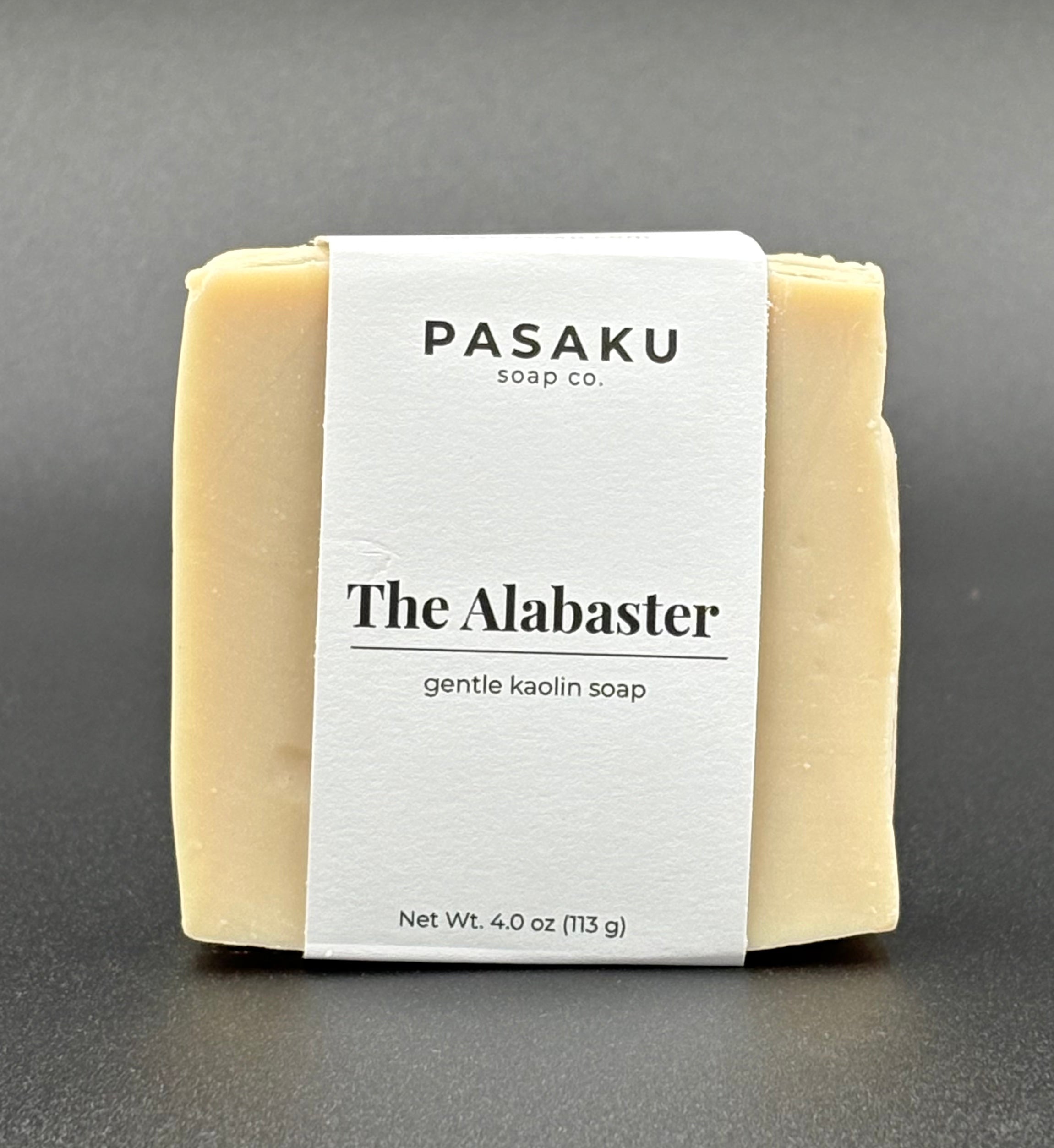
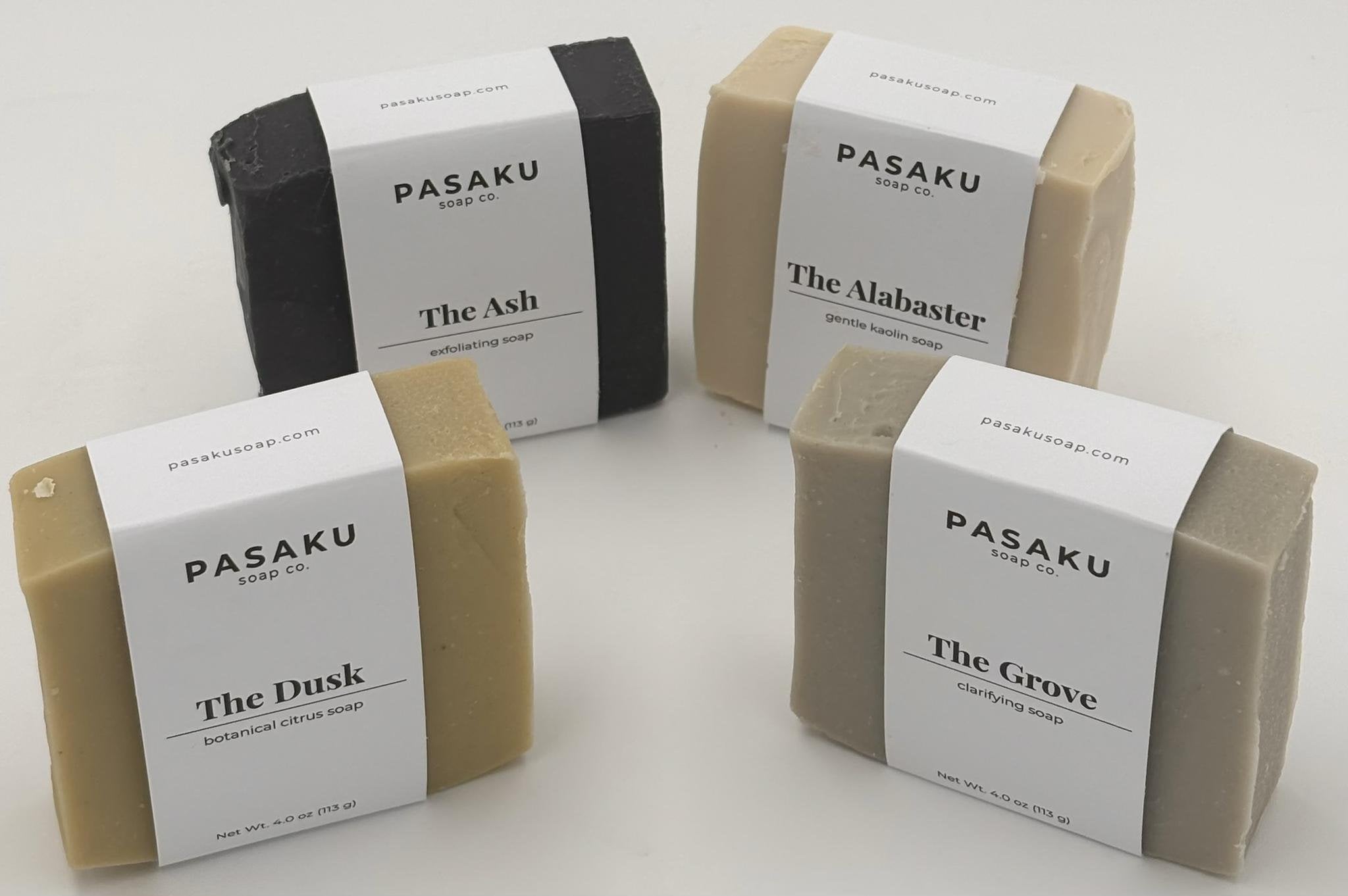
If you are early in the process and do not yet have a reaction history, start with a bar whose list you can read without a glossary. The Alabaster | Unscented Plant-Based Artisan Soap is built on a short base of Shea Butter, Olive Oil and Kaolin clay, making it a simpler starting point.
!Hands holding a handmade bar of soap under a bright bathroom window while reading the ingredient list on the paper wrapper
The table below sums up the ingredient families this section flags, so you can match what appears on a wrapper against them.
| Ingredient family | Names to look for | Why it matters |
|---|---|---|
| Fragrance and perfume | Fragrance, parfum, aroma | One word can cover dozens of chemicals |
| Essential oils | Citrus, mint and spice oils | Common contact irritants, even when called natural |
| Dyes and colorants | FD&C or D&C colors, mica, iron oxides | Added for appearance and can irritate |
| Surfactants | SLS, SLES, cocamidopropyl betaine | Can strip oils and dry skin |
| Preservatives | Methylisothiazolinone, phenoxyethanol | Some are known allergens |
| Resins and balsams | Balsam of Peru, propolis, rosin | Trigger contact allergy in some patients |
Bar Soap Ingredients to Avoid If You Have Sensitive Skin
Not every ingredient is a problem for every person, but some show up again and again in reports of skin irritation and are worth avoiding if you have reactive skin.
- Fragrance (parfum): The most common trigger of contact reactions in soap.
- Essential oils: Citrus, mint and cinnamon oils are frequent culprits.
- Dyes and colorants: Often added to make soap look appealing.
A shorter list is usually easier on the skin, giving you fewer places to find a problem. Our own soaps use a short base of Shea Butter, Olive Oil and Kaolin clay.
Irritation or Allergy? Telling the Difference at Home
Irritation and allergy look similar but work differently. Irritant contact dermatitis happens when a substance damages the skin barrier, often after repeated use.
At home, a few clues can help. Irritation can burn or sting right away and often affects areas that touched the soap most. Allergy can spread, itch more, and may appear in places the soap never touched.
Timing and Distribution: The Two Clues That Matter Most
When trying to tell irritation from allergy at home, focus on when symptoms appear and where they show up. These patterns are not proof, but they are the most useful signals you can collect without a clinic.
- Irritation timing: Symptoms can begin within minutes to a few hours of washing and often improve once you stop using the bar.
- Allergy timing: The first exposure may cause nothing. Sensitization can take days to years, and a reaction can appear 24 to 72 hours after contact. Once sensitized, even a small amount can trigger a response, and symptoms may worsen for a day or two after you stop.
- Irritation distribution: Sharp borders at the wash area, often on the hands, forearms, face, or underarms. Skin may look dry, cracked, or red without small bumps.
A common pattern is a reaction that starts as dryness and stinging with daily use, then escalates to itching and a spreading rash after a new bar is introduced.
Build a Simple Symptom Diary
A diary turns vague impressions into a record you can act on and, if needed, bring to a dermatologist. Log the same fields each day.
- Product and date: The exact bar, the date you started it, and how often you used it.
- Body location: Where symptoms appeared, with a simple sketch or photo.
- Timing: When symptoms started relative to use, and whether they improved or worsened overnight.
- Symptom type: Itching, burning, stinging, dryness, flaking, redness, bumps, blisters, or swelling.
- Severity: A simple 0-10 scale is enough; consistency matters more than precision.
- Other variables: New lotion, detergent, clothing, weather, or stress that could confound the picture.
A week of entries is usually enough to see whether a pattern is tied to a specific bar. Two weeks gives you a clearer baseline.
The One-Product-at-a-Time Elimination and Reintroduction Method
Once you have a suspect, change only one thing at a time. Switching soap, lotion and laundry detergent in the same week makes it impossible to know what caused a reaction.
A basic approach looks like this:
- Washout: Pause all new products for one to two weeks and use only products you already tolerate. Note your baseline symptoms.
- Single swap: Introduce one fragrance-free bar, such as The Alabaster | Unscented Plant-Based Artisan Soap, for a few days. Keep everything else constant.
- Daily log: Note any changes in your skin each day using the diary fields above.
- Reintroduce: If the baseline holds, add back one suspect product and watch for another week. If symptoms return, you have a stronger signal.
- Repeat only if needed: Test one variable at a time. A set of three bars, like The Soap Trio, is useful for comparing side by side without changing your routine.
A patch test on a small area, like the inner forearm, can help before full use.
If you are testing a bar that contains a known allergen, speak with a clinician before any patch test.
Soap Allergy Symptoms to Watch For
Watch for these signs after using a bar:
- Redness, itching or a raised rash
- Dryness, flaking or tight skin
- Burning or stinging during use
Stop using the bar if symptoms are strong, spreading or getting worse. Persistent or severe symptoms should be checked by a doctor or dermatologist. Patch testing by a clinician remains the only way to confirm which specific ingredient is responsible.
Testing One Variable at a Time
Once you have a suspect, change only one thing at a time. Switching soap, lotion and laundry detergent in the same week makes it impossible to know what caused a reaction.
A basic approach looks like this:
- Pause all new products for one to two weeks.
- Use a single fragrance-free bar, such as The Alabaster | Unscented Plant-Based Artisan Soap, for a few days.
- Note any changes in your skin each day.
- Add back one suspect product and watch for another week.
- Repeat only if you need more information.
A patch test on a small area, like the inner forearm, can also help before full use. Many people find it simplest to test one new soap at a time; a set of three is useful for comparing side by side, like The Soap Trio.
Soap Allergy Treatment and How Long a Reaction Lasts
Mild irritation often fades within a few days after you stop using the trigger. Keep the skin moisturized and avoid scrubbing. Allergic reactions can last one to three weeks, sometimes longer, even after you stop the product, and symptoms may get worse before they improve.
Treatment depends on severity. For persistent itching, ask a pharmacist or doctor about appropriate options before using any treatment on broken skin.
Choosing Your Next Bar Soap Based on Your Label Check
Once you have checked labels, pick a bar with a short, familiar ingredient list. Our Best Natural Soap for Sensitive Skin article walks through gentle options in more detail.
If you want a simple, unscented base, start with The Alabaster | Unscented Plant-Based Artisan Soap, designed for people who prefer a clean, fragrance-free bar.
Our bars are hand-poured in small batches. Reading labels is not about finding a perfect soap.
Ready to find a bar that fits your routine? Get started with Pasaku Soap Company and try a fragrance-free, plant-based option made by hand in small batches.
Frequently Asked Questions
What ingredients should I avoid in bar soap?
If you have sensitive skin, start by watching for fragrance, dyes, and harsh surfactants such as sodium lauryl sulfate near the top of the ingredient list. Fragrance is often the most common trigger, and it can appear as a single word even when it blends many compounds. Balsam of Peru and certain preservatives are also known contact allergens for some people. Keep a short list of what you react to and compare each new bar against it before you buy.
What do soap allergy symptoms look like?
Common signs include itching, redness, dryness, a raised or bumpy rash, and burning that appears where the soap touched the skin. Irritant reactions often show up within minutes to hours of washing and are tied to how strongly the soap strips the skin. Allergic contact dermatitis usually takes one to several days to develop after repeated exposure. If the rash spreads, blisters, or does not improve after you stop using the bar, contact a dermatologist or allergist.
How long does an allergic reaction to soap last?
A mild irritant reaction often fades within a few days after you stop using the soap and let the skin recover. Allergic contact dermatitis can last one to three weeks, and sometimes longer, because the immune response takes time to settle. Keep the area moisturized with a fragrance-free product and avoid scratching. If symptoms persist beyond three weeks or affect your sleep or daily activities, schedule a visit with a healthcare provider.
Can bar soap trigger eczema symptoms?
Yes. Soaps with strong surfactants and fragrance can dry out the skin barrier, which may worsen eczema flares for people already prone to them. Patch testing with a dermatologist is the most reliable way to confirm a specific trigger.
