

How to Tell How Long Eczema Takes to Heal
Last Updated: November 18, 2026
Quick Summary
Most eczema flares clear within a few weeks once treatment starts, though mild flares can improve in one to two weeks and severe ones take longer. Consistent daily care is what helps you heal eczema and keeps it from returning.
- Mild flares often improve within one to two weeks with consistent care.
- Moderate flares often take several weeks to clear with treatment.
- Itching and weeping usually ease first, while dryness and flaking take longer.
- Keep moisturizing after patches look clear, since the skin barrier is still recovering.
- See a clinician if eczema does not improve after several weeks of consistent home care.
Table of Contents
- How Long Eczema Usually Takes to Heal
- How Long Eczema Lasts With Treatment
- How Long Eczema Lasts Without Treatment
- How Long Eczema Takes to Clear Up With Hydrocortisone
- Eczema Healing Stages, Step by Step
- What to Do When Eczema Is Not Improving
- Planning Your Next Step With Gentle, Fragrance-Free Skin Care
- Frequently Asked Questions
How Long Eczema Usually Takes to Heal
Most eczema flares clear within a few weeks once treatment starts, but the timeline to heal eczema depends on severity, location, and how well the skin barrier recovers. Many people with atopic dermatitis find that a mild flare fades faster than a widespread, stubborn one. Knowing what to expect helps you judge whether your skin is healing or needs a different approach.
Eczema is a chronic condition, which means it can return even after it clears. Flares often come and go, so a healed patch today does not always mean the condition is gone for good. The National Institute of Arthritis and Musculoskeletal and Skin Diseases overview of atopic dermatitis describes eczema as a long-term condition that flares and calms over time.
Here is a rough guide many people use:
- Mild flare: Often improves within one to two weeks with consistent care.
- Moderate flare: Often takes several weeks to clear with treatment.
- Severe or widespread flare: Can take longer and may need prescription care.
These are general patterns, not guarantees. Your own timeline may be faster or slower.
How Long Eczema Lasts With Treatment
Eczema treated with a moisturizer and a suitable topical medication usually improves within a few weeks. Many flares begin to look calmer within the first week, with less redness and itching. Full clearing often takes longer, especially if the skin was cracked or infected.
Treatment works best when you use it every day, not just when symptoms flare. Skipping doses or stopping early can let the rash return. Keep these habits in mind:
- Apply a thick, fragrance-free moisturizer at least twice a day.
- Use prescribed topical medication exactly as directed.
- Avoid hot showers and harsh soaps that strip the skin barrier.
- Pat skin dry and moisturize while it is still slightly damp.
A common mistake is stopping treatment as soon as the skin looks better. Some patches still need care for a few days after they appear clear.
How Long Eczema Lasts Without Treatment
Untreated eczema can last much longer, sometimes for months, and it often gets worse before it gets better. Scratching breaks the skin, which slows healing and raises the risk of infection. Without a barrier repair routine, the skin stays dry and reactive, so flares tend to return.
Some people see mild eczema settle on its own over time, but this is less predictable. Waiting without care can mean more discomfort and more time before the skin recovers. If symptoms last longer than a few weeks with home care, speak with a doctor about treatment options.
How Long Eczema Takes to Clear Up With Hydrocortisone
Over-the-counter hydrocortisone cream is a common first step for mild itchy patches. Many people notice less itching within a day or two, and visible redness often fades within about one to two weeks. Hydrocortisone is meant for short-term use on small areas.
Use it as directed on the label, and do not apply it to broken skin or the face unless a doctor tells you to. If patches do not improve after about one to two weeks, or they spread, a clinician can recommend a stronger medication. Pairing hydrocortisone with a moisturizer usually works better than using either one alone.
Eczema Healing Stages, Step by Step
Healing usually follows a pattern, but it is not a straight line. Knowing what tends to improve first, and what lags behind, helps you tell real progress from a temporary calm. A common pattern is that itching and redness ease before the skin barrier is fully rebuilt.
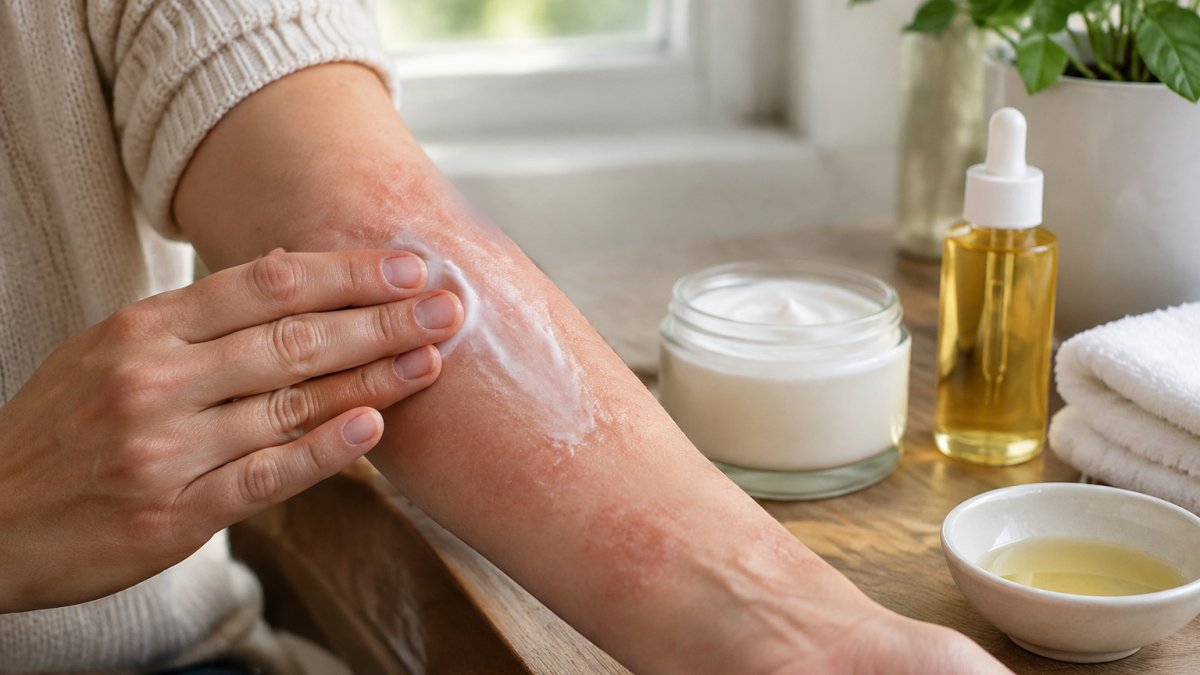
- Active flare: Skin is red, itchy, and may weep, crust, or feel warm. Scratching further breaks the barrier, so this is the stage where gentle care matters most.
- Calming phase: Redness and swelling start to fade and itching lessens. The skin may still be tender and reactive to soaps, heat, or fabrics.
- Repair phase: Skin looks dry, flaky, or slightly rough as it rebuilds. This is the stage people most often mistake for a setback, because flaking can look worse even as the barrier is recovering.
- Maintenance phase: Skin looks normal, but daily moisturizing keeps it from flaring again. The barrier can stay more permeable than unaffected skin for weeks after visible symptoms clear.
What tends to improve first, and what takes longer
- First to improve: itching, weeping, and active redness often ease within the first days to two weeks of consistent treatment.
- Slower to improve: dryness, flaking, thickening (lichenification) from long-term scratching, and discoloration can take several weeks to months to settle.
- Last to recover: the skin barrier itself. Even when a patch looks clear, it may still lose water faster than surrounding skin, so moisturizing should continue after symptoms fade.
How to tell healing from temporary relief
Reduced itching alone does not mean the skin has healed. Temporary relief can come from a cool compress, a brief pause in scratching, or the first days of a topical treatment, and it can fade quickly if care stops. Observable signs of true healing include steadily smaller patches, less redness at the edges, no new weeping or crusting, and skin that feels softer and less tight over one to two weeks. A patch that repeatedly calms and re-flares in the same spot is a sign the barrier has not fully recovered.
Timelines differ by age, body area, severity, and eczema type
A single average hides a lot of variation. A mild, localized patch on the forearm often calms faster than widespread involvement or skin on the hands, feet, or face, where friction, washing, and thin skin slow recovery. Children and adults can respond differently, and some eczema types, such as nummular or dyshidrotic eczema, follow their own patterns. Severe or recurrent disease generally needs longer treatment and a clinician's input.
Here is a summary of typical timing by stage:
| Stage | What You Notice | Typical Timing |
|---|---|---|
| Active flare | Redness, itching, swelling, weeping | Days to first week |
| Calming | Less itching, fewer weeping spots | Week one to two |
| Repair | Dry, flaky, rough skin; barrier still fragile | Weeks two to four |
| Maintenance | Normal-looking skin; barrier continues to recover | Ongoing with daily care |
Watch out: flaking and roughness during the repair phase can look like the rash is worsening, but if redness and itching are trending down, that is usually progress rather than a new flare. Timelines vary widely, so use this table as a rough guide only.
What to Do When Eczema Is Not Improving
If eczema does not get better after several weeks of consistent care, treat that as a signal to reassess rather than to simply wait longer. Common reasons a flare stalls include too little moisturizer, medication applied too sparingly or stopped too early, ongoing contact with an irritant, or a trigger that has not been identified.
Reassess in this order
- Check moisturizer volume and timing. A thick, fragrance-free cream or ointment applied at least twice a day, and within a few minutes of bathing while skin is still damp, is commonly recommended as part of barrier repair.
- Check medication use. Prescribed topical medication should be used exactly as directed, including for a few days after the skin looks clear. Applying too little, skipping days, or stopping at the first sign of improvement are common reasons patches return.
- Check for ongoing irritants. Harsh soaps, hot showers, fragranced products, wool or rough fabrics, and repeated wet-dry cycles on the hands can keep a patch active even when treatment is correct.
- Check for triggers you can control. Heat and sweating, stress, and seasonal dryness are common contributors. Keeping a simple symptom and exposure log can reveal a pattern that is not obvious day to day.
- Check whether the diagnosis is right. Eczema can resemble contact dermatitis, fungal infections, or other rashes. A clinician can confirm the diagnosis and adjust treatment if the usual approach is not working.
When to contact a clinician
Persistent eczema that does not respond to several weeks of consistent home care deserves a visit. A healthcare provider can review how you are using treatment, consider a stronger prescription, and check for other causes. Contact a clinician sooner if the rash is spreading, is on the face or near the eyes, or is significantly affecting sleep or daily life.
Infection warning signs that need prompt attention
A slow flare and a possible infection can look similar at first, but some signs warrant prompt medical attention rather than watchful waiting:
- Yellow crusting, pus, or weeping that increases rather than settles
- Warmth, swelling, or redness that spreads beyond the original patch
- Fever or feeling unwell
- Pain that gets worse instead of better
- Rapidly spreading streaks or blisters
Watch out: reduced itching after starting treatment does not rule out infection, if crusting, warmth, or spreading redness appear, seek care even when the itch has calmed. Call a doctor or seek urgent care if you notice any of these signs, and do not apply additional topical medication to broken or infected-looking skin without guidance.
Planning Your Next Step With Gentle, Fragrance-Free Skin Care
Once your flare starts to calm, keeping a simple routine can help you manage skin care between flares. Pasaku Soap Company makes hand-poured artisan soaps, and The Alabaster | Unscented Plant-Based Artisan Soap is a fragrance-free, plant-based option at $9.00 that is formulated with shea butter, olive oil, and white kaolin clay for a mild, creamy lather. Shopping for a gentle, unscented bar is a good first step, and a best natural soap for sensitive skin guide can help you compare options.
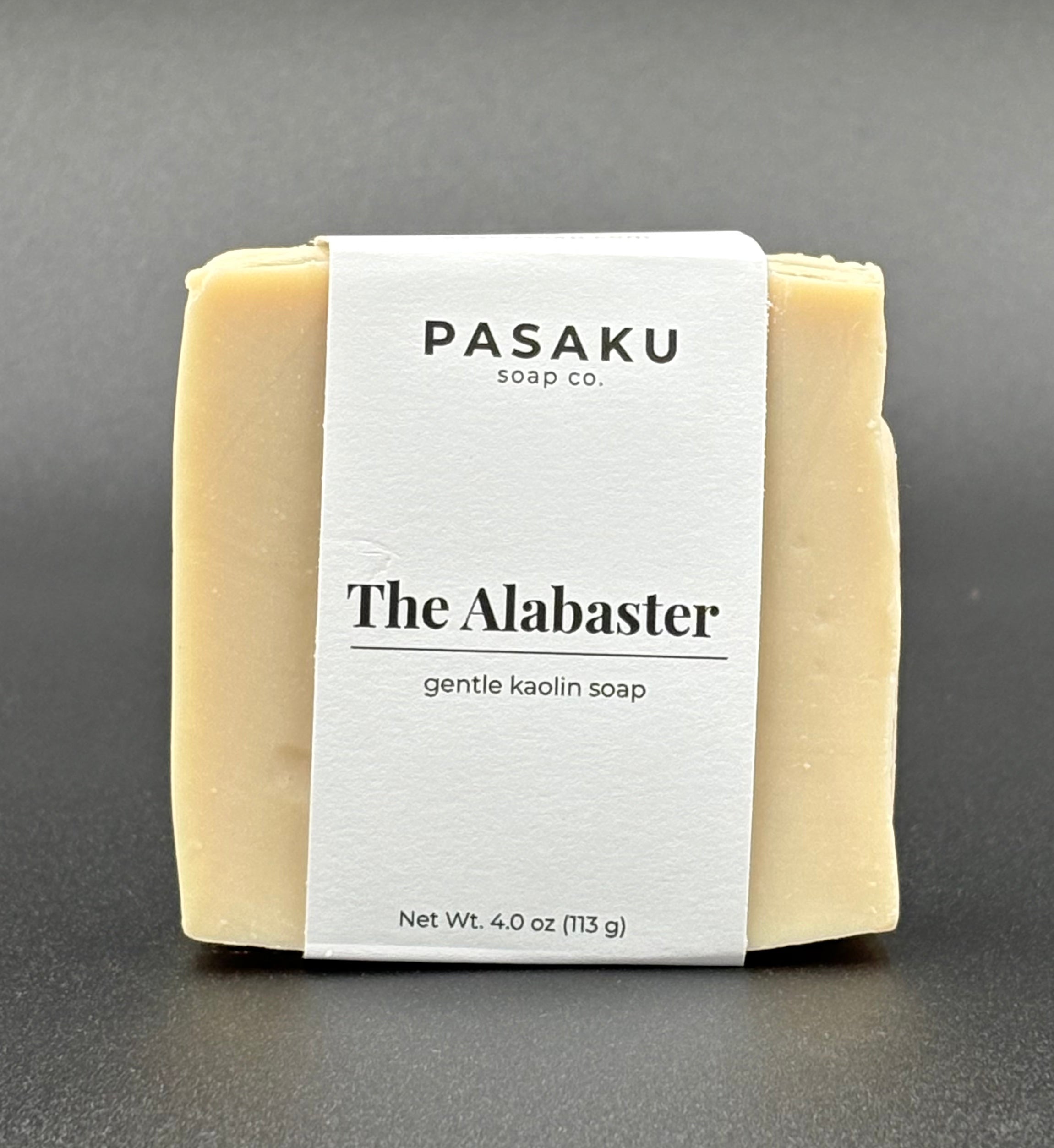
Keep choosing products without added fragrance, rinse well, and moisturize after every wash. Consistent care is what keeps healed skin from flaring again.
Frequently Asked Questions
How long does an eczema flare usually last?
A typical eczema flare often lasts about one to three weeks when it is treated consistently with moisturizers and prescribed topical medication. Flares that go untreated, or that are repeatedly triggered by irritants, scratching or infection, can persist longer. Healing usually shows up gradually: redness fades first, then itching eases, and the skin becomes smoother and less flaky. If a flare has not improved after two to three weeks of care, or if it is getting worse, it is worth contacting a dermatologist or primary care provider.
How long does eczema last without treatment?
Without treatment, eczema flares can last several weeks to months, and chronic eczema may come and go over years. Skin that is repeatedly scratched or exposed to irritants has a harder time repairing its barrier, so symptoms tend to hang on. Consistent moisturizing with a fragrance-free emollient, avoiding known triggers and keeping nails short can shorten a flare even before medication is involved. Signs of infection, such as oozing, crusting, warmth or spreading redness, need prompt medical attention.
How long does eczema take to clear up with hydrocortisone?
Over-the-counter hydrocortisone 1% cream is often used for mild eczema, and many people notice some improvement in itching and redness within a few days. Clearing a full flare usually takes about one to two weeks of consistent use, and it should be applied only as directed on the label. Hydrocortisone is not a fix for severe, widespread or infected eczema. If there is no clear improvement after about two weeks, or if the rash spreads, a clinician can recommend a stronger prescription option.
How can you tell if eczema is healing?
Healing signs include less redness and warmth, reduced itching and scratching, fewer new bumps or blisters, and skin that feels smoother and less tight. Flaking usually decreases as the skin barrier rebuilds. Be aware that temporary relief from a cream can feel like healing even when the underlying flare is still active, so look for lasting changes over several days rather than a single good day. Keep moisturizing during recovery, since dry skin is a common cause of flare-ups returning.
