

Fragrance Free Soap for Reactive Skin: 2026 Guide
Table of Contents
- Why Your Reactive Skin Needs Truly Fragrance Free Soap
- Unscented vs Fragrance Free Soap: The Label Loophole
- How to Identify Skin Irritants in Soap Ingredients
- The Role of pH Balance and the Skin Barrier
- Natural Fragrance Free Soap for Eczema and Flare-Ups
- How We Evaluated: What Makes an Artisan Bar Gentle
- Our Top Pick: The Alabaster Unscented Artisan Soap
- Patch Testing Protocol and a Gentle Transition Plan
- Frequently Asked Questions
Last Updated: September 9, 2026
Why Your Reactive Skin Needs Truly Fragrance Free Soap
Reactive skin is not a preference; it is a physiological response where the skin barrier is easily compromised. For anyone dealing with this condition, fragrance free soap for reactive skin is the single most important change you can make to your cleansing routine. At Pasaku Soap Company, we specialize in hand-poured artisan soaps crafted with care in Wylie, TX. We are dedicated to providing high-quality, handcrafted products that elevate your daily self-care routine.
The core problem is that fragrance is one of the most common triggers for contact dermatitis and skin inflammation. According to the American Academy of Dermatology Association, fragrance is a leading cause of allergic contact dermatitis, a condition that presents as redness, itching, and flaking. When your skin is already reactive, every wash either supports your lipid barrier or strips it further, and synthetic fragrance compounds are aggressive strippers.
Below, we will show you exactly how to read labels, avoid hidden irritants, and transition to a bar that works with your skin instead of against it.
Unscented vs Fragrance Free Soap: The Label Loophole
The difference between these two labels is not marketing nuance; it is a regulatory loophole that can ruin your skin. Unscented soap does not mean the product is free of fragrance chemicals. It simply means the product has no perceptible smell. Manufacturers can add a "masking fragrance" to neutralize the odor of raw ingredients, and they can legally call that product unscented.
Fragrance free soap is the safer standard. This label indicates that no fragrance ingredients, including masking agents, were added at any point in the formulation. The FDA guidance on cosmetic labeling distinguishes between these categories, but the onus is on the consumer to check the ingredient deck rather than trust the front of the package.
When you see "unscented" on a bar, look for hidden terms like "parfum," "masking perfume," or botanical extracts used for scent balancing. If any of these appear, put the bar back. For reactive skin, the label you want is "fragrance free" backed by a short, transparent ingredient list.
How to Identify Skin Irritants in Soap Ingredients
Reading an ingredient list is a skill, and most guides gloss over the specific chemical names that should send you running. The primary offenders in conventional body wash and soap are synthetic surfactants, specifically sodium lauryl sulfate (SLS) and sodium laureth sulfate (SLES). These foaming agents are effective cleansers, but they are harsh on a compromised skin barrier and can strip natural moisture retention.
Beyond sulfates, watch for parabens, synthetic dyes, and essential oils. Many consumers assume essential oils are safe because they are natural, but for reactive skin, they are potent allergens. A common mistake is swapping a synthetic fragrance bar for an "aromatherapy" bar loaded with citrus or lavender oil, only to experience the same flare-up.
The 'Masking Fragrance' Loophole: A Label-Reading Deep Dive
The most dangerous ingredient on a label isn't always listed as "fragrance." It's often hidden under the guise of "unscented." The FDA allows manufacturers to add a masking fragrance, a blend of chemicals designed to neutralize the unpleasant odor of raw ingredients, and still legally label the product as "unscented," provided the final product has no perceptible smell. This is a regulatory loophole that can trigger a reaction in even the most careful shopper.
Here is a practical checklist for scanning labels, specifically for these hidden irritants:
- Sulfates: Sodium lauryl sulfate, sodium laureth sulfate
- Parabens: Methylparaben, propylparaben
- Synthetic dyes: FD&C colors, CI numbers
- Essential oils: Lavender, eucalyptus, citrus, peppermint
- Masking agents (the hidden culprits): Parfum, fragrance, aroma, and the less obvious: benzyl benzoate, citral, citronellol, eugenol, geraniol, hexyl cinnamal, limonene, and linalool. These are often used as masking agents or are naturally occurring components of essential oils that can be listed separately.
The Botanical Extract Trap
Another hidden trigger is the inclusion of botanical extracts for "scent balancing." While a product may not list "fragrance," it can still contain extracts like chamomile, calendula, or rosemary, which are added for their natural aroma or skin-soothing claims. For a subset of reactive skin sufferers, these plant compounds are potent allergens. The safest approach is to choose bars with a short, transparent ingredient list of plant oils and butters, with no botanical extracts added for scent.
If you are looking for natural fragrance free soap for eczema, the safest bars contain a short list of plant oils, butters, and a single cleansing base, nothing else. This is the only way to be certain you are not introducing a hidden allergen into your routine.
The Role of pH Balance and the Skin Barrier
Your skin operates on a slightly acidic pH, typically between 4.5 and 5.5 (peer-reviewed research). This acidity supports the skin microbiome and keeps the lipid barrier intact. Most conventional bar soaps are alkaline, often registering a pH of 9 or higher, which disrupts this balance and leaves skin vulnerable to moisture loss and irritation.
This is where artisan cold-process soap has a distinct advantage when formulated correctly. A well-crafted bar retains natural glycerin and uses skin-compatible oils that help maintain moisture retention, rather than leaving that tight, squeaky-clean feeling that signals barrier damage.
Why pH is the Silent Saboteur for Reactive Skin
The skin barrier, or stratum corneum, is composed of lipids (ceramides, cholesterol, and free fatty acids) that form a protective seal. This seal is maintained by an acidic pH, which also inhibits the growth of pathogenic bacteria. When you wash with an alkaline soap (pH 9-10), you temporarily raise the skin's pH. This does two things:
- Disrupts Lipid Enzymes: The enzymes responsible for synthesizing ceramides function optimally in an acidic environment. An alkaline wash deactivates these enzymes, slowing down barrier repair.
- Increases Transepidermal Water Loss (TEWL): A disrupted barrier allows water to escape more easily, leading to dryness and increased sensitivity. This dryness triggers the itch-scratch cycle common in eczema and dermatitis.
How to Verify pH in Your Soap
Most soap manufacturers do not list pH on the label. You can, however, test it yourself. Use pH test strips (available at most drugstores for under $10) to check a bar's pH. Wet the bar, rub the strip on the lather, and compare the color to the chart. A bar with a pH between 7 and 8.5 is considered neutral to mildly alkaline and is generally safe for most skin. A bar above 9 is too harsh for reactive skin.
The Artisan Advantage: Superfatting and Glycerin
A well-formulated cold-process soap uses a process called superfatting, where a small percentage of oils (typically 5-8%) are left unsaponified. This means they remain as free oils in the bar, providing a moisturizing effect and helping to buffer the alkalinity of the soap. Additionally, cold-process soap naturally retains glycerin, a humectant that draws moisture to the skin. Commercial soap manufacturers often extract the glycerin to sell separately, leaving a harsher bar behind.
For those with eczema-prone or atopic dermatitis skin, pH matters as much as fragrance. An alkaline cleanser can trigger itch relief cycles that lead to scratching, further inflammation, and a longer recovery window. Choosing a fragrance free soap for reactive skin that is also pH-balanced helps preserve the acid mantle and reduces the likelihood of post-wash flare-ups.
Natural Fragrance Free Soap for Eczema and Flare-Ups
For individuals managing eczema, the search for a natural fragrance free soap for eczema often feels like a dead end. Drugstore options labeled "sensitive skin" still contain synthetic detergents, and natural options frequently rely on essential oils for appeal. The category is frustratingly thin.
What actually works for eczema-prone skin is a bar that prioritizes soothing agents and emollients. Look for ingredients like oat extract, which has documented skin-calming properties, and colloidal oatmeal, which helps relieve itching. Ceramides and glycerin are also valuable because they support the lipid barrier and draw moisture into the skin.
The most effective bars for reactive skin are often those that skip the "benefit cocktail" entirely. A bar with five or six thoughtfully chosen plant-based oils can be very effective. The goal is gentle cleansing that does not disturb the skin's natural repair process, not a product that promises to fix everything at once.
How We Evaluated: What Makes an Artisan Bar Gentle
Most artisan soaps are not suitable for reactive skin because they often rely on fragrance to differentiate themselves in a crowded market.
The bars that are often recommended for reactive skin share three traits. First, they use a plant-based cleansing base free of synthetic surfactants. Second, they contain no fragrance, no essential oils, and no botanical extracts added for scent. Third, they retain enough natural glycerin and superfatting oils to leave the skin feeling conditioned rather than stripped.
| Evaluation Criteria | What to Look For | Why It Matters |
|---|---|---|
| Cleansing Base | Plant oils, no sulfates | Avoids stripping the lipid barrier |
| Fragrance Status | Truly fragrance free | Prevents contact dermatitis triggers |
| Moisturizing Agents | Glycerin, shea butter, oat extract | Supports moisture retention |
| Ingredient Count | Short, recognizable list | Reduces risk of hidden allergens |
If you are coming from commercial body wash, expect an adjustment period. Artisan soap lathers differently and rinses differently. The payoff is a calmer skin barrier over time.

Our Top Pick: The Alabaster Unscented Artisan Soap
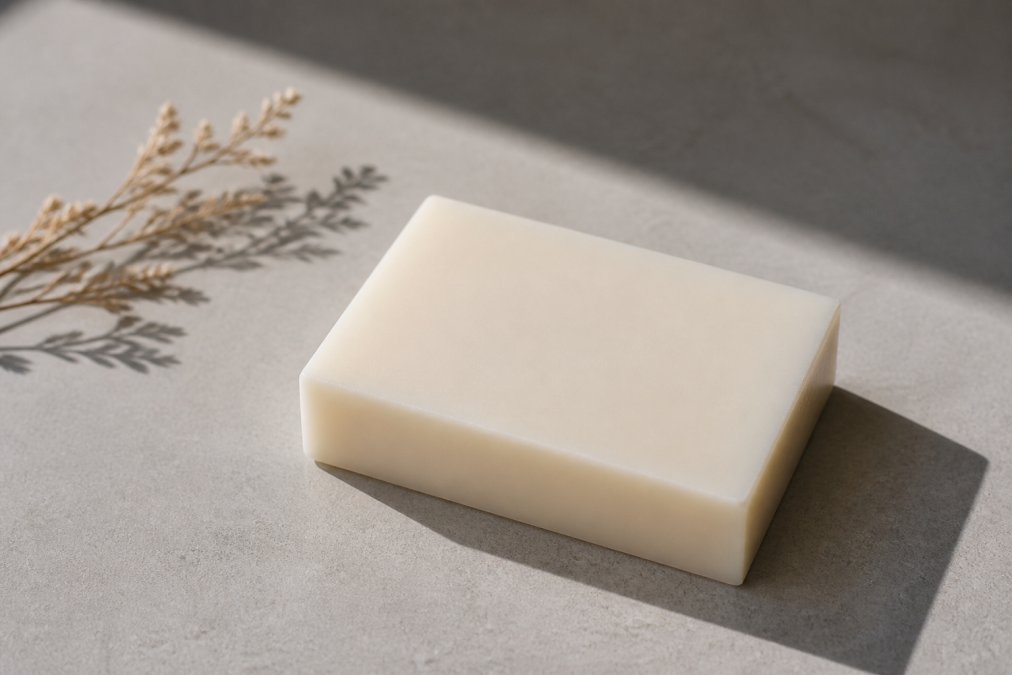
For most people with reactive skin, our top pick is The Alabaster Unscented Plant-Based Artisan Soap from Pasaku Soap Company. This bar is the olfactory equivalent of fresh morning light: crisp, elegant, and exceptionally gentle. It is hand-poured in small batches using a plant-based formulation that contains no fragrance, no essential oils, and no synthetic additives.
The Alabaster was designed specifically for those who want an uncomplicated ritual focused entirely on skin health. Priced at $9.00, it sits above drugstore pricing, but the value is in the formulation. A single bar of small-batch artisan soap can last longer than liquid body wash, and it does not rely on synthetic humectants to fake hydration.
The one drawback is that small-batch production means each pour may vary slightly in appearance. The formula remains consistent, but the aesthetic character of each bar is unique. For reactive skin, this bar delivers the cleanliness and the barrier support that commercial cleansers miss.
Patch Testing Protocol and a Gentle Transition Plan
Switching soaps without a plan is a common mistake, especially for reactive skin. A proper transition prevents a false negative, where a new irritation is blamed on the soap when it is actually a reaction to stopping your old product.
Start with a patch test. Apply a small amount of lather to the inside of your forearm and leave it for 24 hours. If no redness or itching develops, proceed to using the bar on your hands for three days before moving to your body. This staged approach isolates the variable.
When you do switch, expect a brief adjustment period. If your previous soap contained sulfates, your skin may feel different for the first week as your moisture retention recalibrates. This is not a reaction; it is your skin resetting its natural oil production.
For hard water areas, a common frustration is poor lather. Artisan soap reacts with hard water minerals, but The Alabaster's plant-based formula still produces a creamy, effective lather. Rinsing thoroughly and following with a fragrance-free moisturizer will support your skin barrier through the transition.
Finding a fragrance free soap for reactive skin that actually delivers on its promise is harder than it should be. The industry hides fragrance behind "unscented" labels and relies on synthetic chemistry that undermines your skin's natural defenses. Pasaku Soap Company offers a genuine alternative: hand-poured, small-batch artisan soap that skips the irritants and focuses on plant-based nourishment. Get started with The Alabaster and give your skin the clean, fragrance-free ritual it has been asking for.
Frequently Asked Questions
What is the difference between unscented and fragrance free soap?
Unscented soap may contain masking fragrances to hide the chemical smell of its ingredients. Fragrance free soap, by definition, contains no fragrance compounds at all, including essential oils. For reactive skin, fragrance free is the safer choice because it eliminates the risk of a reaction from either synthetic perfumes or natural botanical extracts.
What kind of soap is best for hypersensitive skin?
A fragrance free soap with a short, transparent ingredient list is best. Look for gentle plant-based surfactants, glycerin for moisture retention, and soothing agents like oat extract or aloe vera. Avoid sulfates, parabens, synthetic dyes, and essential oils. A pH-balanced bar close to 5.5 helps preserve the skin barrier.
Can fragrance free soap help with eczema flare-ups?
Yes. For eczema-prone skin, fragrance is a common trigger for contact dermatitis and inflammation. Switching to a natural fragrance free soap for eczema removes that irritant and allows the skin barrier to repair. Pairing it with a moisturizer immediately after washing supports the lipid barrier and reduces dryness.
How do I know if a soap is truly hypoallergenic?
The term hypoallergenic is not strictly regulated, so check the ingredient list rather than trusting the claim. A truly gentle soap for reactive skin should be fragrance free, free of essential oils, and contain no synthetic dyes. It should also skip harsh surfactants like sodium lauryl sulfate and common allergens like nuts or gluten.
How should I test a new soap before using it on my body?
Do a patch test on the inside of your forearm. Apply a small amount of lather and leave it for 24 hours. If you see redness, itching, or a rash, wash it off and stop using the product. If your skin stays calm, introduce the soap gradually, once every other day, before using it fully.