

Can You Use Cold Process Soap on Your Face Daily?
Quick Summary
Cold process soap can be used on the face daily, but it depends on your skin. Because it is alkaline and most facial skin is slightly acidic, dry or sensitive skin may react more. Start with a few uses a week, and switch to a gentler cleanser if tightness, redness or itching appears.
- Cold process soap is alkaline, while most facial skin sits closer to a slightly acidic level.
- Dry and sensitive skin usually reacts more to alkaline bars.
- Start with a few uses a week and watch how your skin feels.
- Do a patch test on the inside of your elbow and wait 24 to 48 hours.
- Stop using the bar if redness, itching or burning appears.
Table of Contents
What Cold Process Soap Is and How It Is Made
Cold process soap is a bar of soap that is made by mixing oils or fats with a lye solution, then letting the mixture harden over several weeks. Pasaku Soap Company hand-pours its bars in small batches. Learn more about the cold-process method and ingredients behind each bar. The name refers to the fact that no outside heat is needed to start the reaction, which is why the method is often called "cold."
The process starts with a lye solution and a set of oils, butters and sometimes clays. When the two combine, a chemical reaction called saponification turns the fats into soap and glycerin. Makers measure everything carefully, because the amount of lye must match the oils exactly. After the mixture is poured into molds, it sits for a set time before it is cut into bars and left to cure. Curing lets the water evaporate and the bar harden, which often takes several weeks.
- Oils and butters: Olive oil, shea butter and other plant fats form the base.
- Lye solution: Sodium hydroxide, mixed with water, starts the reaction.
- Mold and cure: The soap sets, is cut, and dries for several weeks.
Hand-poured bars such as The Alabaster and The Ash follow this same method.

Is Cold Process Soap Safe for Daily Facial Use?
Many people ask whether a handmade bar can be used on the face every day. The honest answer is that it depends on your skin. Cold process soap is alkaline, and most facial skin sits closer to a slightly acidic level.
A few factors make daily facial use more or less comfortable:
- Skin type: Dry and sensitive skin usually reacts more to alkaline bars.
- Formula: Extra oils and clays can make a bar feel gentler on the face.
- Water: Rinsing well and patting dry helps reduce leftover residue.
If you want to try it, start with a few uses a week and watch how your skin feels. A plain, unscented bar is one option to consider when starting out. If tightness, redness or itching appears, stop and switch to a gentler cleanser. For a closer look at why some people find soap harsh on the face, see American Academy of Dermatology guidance on cleansing skin. For a deeper guide, read gentle soaps for sensitive skin.
Why Soap Does Not Lather in Hard Water and What to Do About It
If your bar seems to produce little lather, the water may be the cause. Hard water contains high levels of calcium and magnesium. These minerals react with soap to form a scummy residue, so less lather forms and more soap is wasted. Many people in hard-water areas see this most in the shower and on the sink.
You can work around it with a few simple habits:
- Wet the bar first: A damp bar and a damp face lather more easily.
- Use less pressure: Gentle circles build foam better than hard scrubbing.
- Rinse with cooler water: Hot water can make residue stick more.
- Consider a water filter: A simple shower filter can soften the water over time.
Hard water is a common cause of poor lather. U.S. Geological Survey overview of water hardness explains how mineral levels vary by region, which can help you understand what your tap water contains.
Using Cold Process Soap on the Face: A Step-by-Step Routine
A simple routine keeps the process gentle and consistent. Follow these steps:
- Wet your face with lukewarm water.
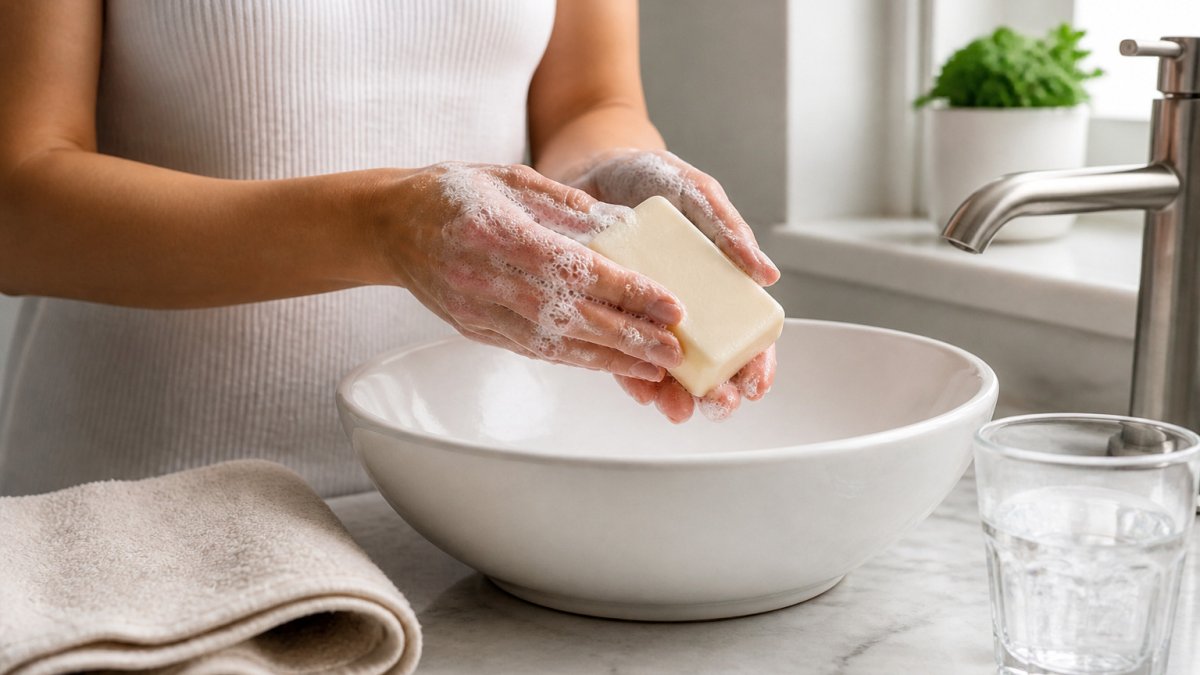
- Rub the bar gently between your hands to create a light lather.
- Apply the lather to your face with your fingertips, using small circles for about 30 seconds.
- Rinse thoroughly with lukewarm water until no residue remains.
- Pat your face dry with a soft towel.
- Apply moisturizer while your skin is still slightly damp.
Add a moisturizer afterward to help replace any oils lost during cleansing.
Checking Your Skin Type Before You Start
Before you use a new bar on your face, take a moment to check your skin. Look at how it feels an hour after washing your face with plain water. Tight or flaky patches often mean your skin is dry. A shiny T-zone usually points to oily skin. Redness, itching or burning can signal sensitivity.
If you have eczema, rosacea or another skin condition, talk with a dermatologist before adding a new bar to your routine. A professional can tell you whether a handmade soap fits your needs.
The Alabaster | Unscented Plant-Based Artisan Soap →
Running a Patch Test
A patch test shows how your skin reacts before you use a bar across your whole face. Follow these steps:
- Wet a small area of skin, such as the inside of your elbow or behind your ear.
- Rub a little lather onto that spot for 30 seconds.
- Rinse and pat dry.
- Wait 24 to 48 hours and check for redness, itching or irritation.
If the area stays calm, you can try the soap on your face. If it turns red or itchy, stop using the bar.
Cold Process Soap for Acne-Prone Skin
Acne-prone skin often responds better to a cleanser that removes oil without leaving skin raw. Others find that drying bars make acne worse, so results vary.
The Grove, which blends eucalyptus, tea tree and lavender, and The Ash, which includes activated charcoal and pumice, are two options to consider. Start slowly and watch for dryness. If breakouts get worse, see a dermatologist.

Ingredient and Formulation Checks Before You Buy
Reading the ingredient list tells you a lot about how a bar will feel on your face. Look for these points:
- Oils: Olive oil and shea butter are used in Pasaku's bars.
- Fragrance: Fragrance-free bars are usually easier on sensitive skin.
- Clays and exfoliants: Charcoal, pumice and clays can be drying for some people.
- Superfat: Extra oil that is not turned into soap helps the bar feel gentler.
For more on how soap is formulated, the U.S. Food and Drug Administration guidance on cosmetics explains how labeling and ingredient information should be presented.
How to Store Handmade Soap So It Stays Hygienic
Place the soap on a draining dish so water runs off. Keep it out of a puddle at the bottom of the shower. Let it air dry fully between uses. A bar that stays wet can go soft and develop residue faster.
Choosing the Right Bar for Your Face and Your Next Step
If you have sensitive skin, start with a plain bar such as The Alabaster, which is unscented and made with shea butter and olive oil. If you have oily or breakout-prone skin, try The Grove or The Ash. Not sure which one fits? The Soap Trio at $25.00 lets you choose any three bars.
Each bar is $9.00 on its own.
Frequently Asked Questions
Is cold process soap gentle enough for daily facial use?
For many people with normal or combination skin, a well-formulated cold process soap can be used on the face daily. Gentleness depends on the recipe, including the oils used and whether fragrance or essential oils are added. Because soap is alkaline and typically has a higher pH than skin, some people with dry, reactive or eczema-prone skin notice tightness or irritation. Start with once-daily use, watch how your skin feels over two to three weeks, and switch to a gentler cleanser if redness or dryness appears.
Can cold process soap cause breakouts or skin irritation?
It can. Irritation usually comes from high alkalinity, insufficient superfatting, strong essential oils or a fragrance that your skin reacts to. Breakouts can also happen if a rich bar leaves residue on the skin. Rinse thoroughly, pat dry, and stop use if you notice stinging, burning or persistent redness. Running a patch test on the jawline or inner forearm for several days before facial use helps you catch a problem early.
What ingredients should you look for in a facial cold process soap?
Look for a recipe built on skin-conditioning oils such as olive oil and shea butter, a clear superfat percentage, and minimal added fragrance. Unscented or fragrance-free formulas suit sensitive skin best. Clays like kaolin can add a gentler slip. Check the ingredient list on each product page and avoid bars with heavy essential oil loads if your skin is reactive. Pasaku's The Alabaster, for example, is unscented and built on shea butter, olive oil and kaolin clay.
What is a good alternative if cold process soap does not suit your skin?
If soap leaves your face tight or irritated, a dedicated facial cleanser formulated to be mildly acidic or close to skin pH may be a better fit. Gentle, fragrance-free cream or gel cleansers are common options. You can still keep a handmade bar for the body, where the same irritation is less likely to be a problem, and reserve a milder cleanser for the face.
