

Best Dermatologist-Recommended Soap for Body Use
Last Updated: November 8, 2026
Quick Summary
The best dermatologist recommended soap for body use is usually a fragrance-free bar or syndet with a moisturizing base, because fragrance and harsh detergents are common irritants. Bars built on shea butter and olive oil suit dry or sensitive skin, and a patch test helps catch reactions early.
- Fragrance is one of the most frequent causes of contact irritation, so unscented formulas remove a common trigger.
- Syndet bars are often closer to skin's natural mildly acidic pH than traditional soap.
- Look for moisturizing bases like glycerin, shea butter or olive oil, plus barrier-supporting ingredients such as ceramides.
- A bar labeled natural is not automatically gentle, since essential oils can trigger reactions in sensitive skin.
- Patch test any new bar on a small area for a few days before using it all over.
Table of Contents
- What Dermatologists Look for in a Body Cleanser
- Dermatologist-Recommended Body Wash for Sensitive Skin
- Dermatologist-Recommended Body Wash for Dry Skin
- Dermatologist-Recommended Body Wash for Itchy Skin
- Our Picks: Pasaku Artisan Bars Compared
- Choose the Right Bar for Your Skin and Start Cleansing Gently
- Frequently Asked Questions
If you have ever stood in a drugstore aisle trying to pick the best dermatologist recommended soap for body use, you have probably noticed that bars, syndets and body washes all promise gentleness. They are not the same thing. Knowing what each product is made of is the fastest way to choose one that will not leave your skin tight or itchy.
True soap is made by saponifying fats or oils with an alkali, which gives you the classic cold-process bar. Syndet bars, short for synthetic detergent, use gentler cleansing agents and often feel milder on the skin. Body washes are liquids, usually built on synthetic surfactants, with added water and preservatives. Each format can work well, and each can irritate, depending on the formula.
Here is how we would sort them for someone with a sensitive or dry skin concern:
- Bar soap: Simple ingredient lists and a firm, portable format. Look for added moisturizers like shea butter and olive oil to offset drying.
- Syndet bars: Often closer to a skin-neutral pH. Many people with reactive skin find them easier to tolerate than traditional soap.
- Body wash: Easy to lather and convenient for large areas, but preservatives and fragrance are more common, so read the label closely.
Watch out: a bar labeled "natural" is not automatically gentle. Essential oils and some botanical extracts can trigger contact reactions in sensitive skin, even when the rest of the formula is mild.
What Dermatologists Look for in a Body Cleanser
When dermatologists evaluate a body cleanser, they focus on what stays on the skin after rinsing. Harsh surfactants can strip natural oils and disrupt the skin barrier, which is why dry, itchy or eczema-prone skin often flares after a hot, strong-smelling shower. A gentle formula cleans away sweat and dirt while leaving moisture behind.
The checklist is short. Look for fragrance-free or dye-free formulas, a moisturizing base, and recognizable ingredients. Ceramides, glycerin and colloidal oatmeal are common in products aimed at dry or sensitive skin because they help support hydration. A good rule is to skip anything that lists a long string of fragrances or unfamiliar preservatives if your skin reacts easily.
Our bars use a base of shea butter and olive oil, and The Alabaster includes white kaolin clay. A bar is not a substitute for medical advice if a rash persists.
Dermatologist-Recommended Body Wash for Sensitive Skin
If your skin stings, flushes or breaks out after most cleansers, start with the fragrance-free option. Fragrance is one of the most frequent causes of contact irritation, so removing it removes a common trigger.
Our The Alabaster | Unscented Plant-Based Artisan Soap is built for exactly this situation. For a deeper comparison of soaps for sensitive skin, read our guide to the best natural soap for sensitive skin. It is hand-poured in small batches with shea butter, olive oil and white kaolin clay, and it is unscented. Its lather is mild and creamy, and it is designed for people who want a scent-free cleanse. You can explore the fragrance-free Alabaster bar to see the full ingredient profile before buying.

Patch test any new bar on a small area of skin for a few days before using it all over. That step catches reactions early.
Dermatologist-Recommended Body Wash for Dry Skin
Dry skin needs a cleanser that removes sweat and residue without pulling away the lipids that hold water in the stratum corneum. The practical difference between formats matters here. True soap is alkaline, typically around pH 9 to 10, and can raise skin pH temporarily; syndet bars and liquid body washes are usually formulated closer to skin's natural mildly acidic pH, which most practitioners find gentler on a compromised barrier. That does not make every syndet better, a high-surfactant body wash can still leave skin tight, but it explains why a mild syndet bar is often the first recommendation for very dry skin.
Look for three things on the label. First, a moisturizing base: glycerin, shea butter, olive oil, or similar emollients that stay behind after rinsing. Second, barrier-supporting ingredients such as ceramides or colloidal oatmeal, which are common in products positioned for dry and eczema-prone skin. Third, the absence of fragrance and dye, since both are frequent irritants on already-dry skin. A short ingredient list is not automatically better, but it is easier to audit.
Format trade-offs are real. A dense bar generally delivers more cleansing per gram and lasts longer per dollar, while a liquid body wash is easier to spread over large areas and often includes added humectants. Neither format is inherently more moisturizing; the formula decides. If you prefer a bar, choose one built on conditioning butters and oils rather than a high-detergent, high-lather bar. Our bars share a shea butter and olive oil base.
Application habits often matter more than the product. Shorter showers, lukewarm rather than hot water, and applying moisturizer to damp skin within a few minutes of toweling off all reduce water loss. A common pattern is that people blame the soap for dryness that comes from long, hot showers and skipped moisturizer.
Watch out: a bar labeled "moisturizing" can still contain fragrance or essential oils that irritate dry, cracked skin, so read the full ingredient list rather than the front of the package.
Dermatologist-Recommended Body Wash for Itchy Skin
Itchy skin is usually a barrier problem before it is a cleansing problem. When the skin barrier is compromised, water escapes and irritants get in more easily, so the goal is to clean gently and leave as much of the barrier intact as possible. That is why harsh surfactants, hot water, and heavy scrubbing tend to make itch worse rather than better.
Start by separating two causes. Irritant contact dermatitis comes from repeated exposure to soaps, detergents, fragrances, or hot water and usually improves when the trigger is removed (the NHS). Allergic contact dermatitis is an immune reaction to a specific ingredient and can appear even with products marketed as gentle or natural. Essential oils, botanical extracts, preservatives, and some "fragrance-free" formulas that contain masking scents can all trigger reactions in sensitive people. If a rash persists, spreads, or does not improve after you switch to a plain fragrance-free cleanser, that is a reason to see a clinician rather than keep experimenting.
For everyday cleansing, choose a fragrance-free, dye-free formula with a mild surfactant system and added humectants such as glycerin. Colloidal oatmeal is commonly used in products for itchy, dry skin because it is recognized for soothing and barrier support. Keep the water lukewarm, limit shower time, and avoid washcloths or loofahs that create friction.
Exfoliation is a separate decision. Fine pumice or similar physical exfoliants can help rough patches on the arms and legs for skin that tolerates them, but they are not a treatment for itchy or inflamed skin. Our The Ash bar uses fine volcanic pumice for a high-grit scrub and suits skin that already tolerates exfoliation; for skin that is currently itchy or inflamed, start with a milder, unscented bar such as The Alabaster and add exfoliation only after the itch settles.

Watch out: "natural" and "fragrance-free" are not the same as hypoallergenic, and a product can still cause contact allergy even when it contains no added fragrance.
Our Picks: Pasaku Artisan Bars Compared
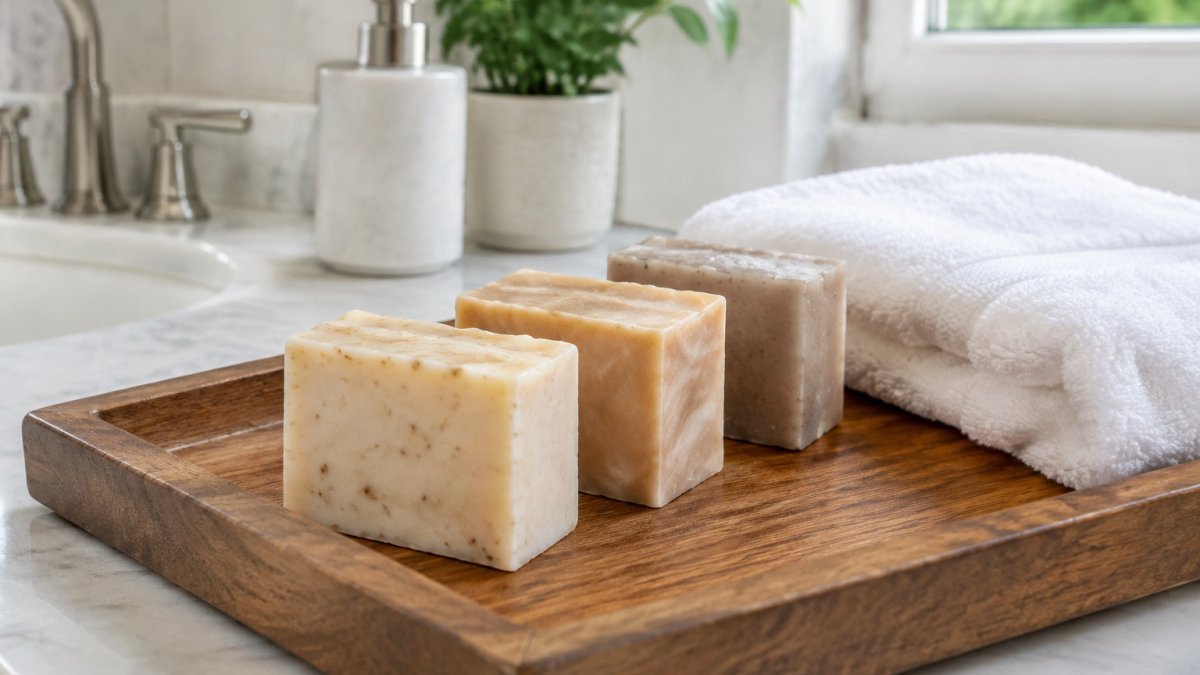
Our current lineup is priced at $9.00 per bar. Each bar is built on a shea butter and olive oil base, and the bars differ in clay, exfoliation and scent.
| Bar | Scent | Texture | Best For |
|---|---|---|---|
| The Alabaster | Fragrance-free | Dense, lotion-like lather | Sensitive skin |
| The Ash | Cedarwood and orange | High-grit exfoliation | Tolerant skin needing a scrub |
| The Grove | Eucalyptus, lavender, tea tree | Silky, stable lather | Clarifying routines |
| The Dusk | Orange, bergamot, lavender | Creamy lather, gentle slip | Soft, calming daily use |
The Alabaster is unscented, so it is one option to consider if you prefer a fragrance-free bar. If you want a daily soap with a noticeable scent and gentle slip, The Dusk is a good match.
Choose the Right Bar for Your Skin and Start Cleansing Gently
Pick the format and formula that match your skin, not the one with the most attractive label. Start with a fragrance-free bar if you react easily, check the ingredient list for moisturizers, and patch test anything new. Shorter, lukewarm showers help as much as the soap does.
If you are shopping for a gift or trying a bar for the first time, our small-batch range gives you a few tested options at one price point. Find your bar from the Pasaku collection and start with the one that suits your skin today.

Frequently Asked Questions
What soap do dermatologists recommend the most?
Dermatologists most often point patients toward gentle, fragrance-free cleansers that avoid harsh detergents and contain moisturizing ingredients such as glycerin, ceramides, or shea butter. Syndet bars and mild cream-based washes are common suggestions for people with dry or sensitive skin. The best choice depends on your skin type, so a product that suits one person may not suit another. If irritation continues, ask a dermatologist to review your routine.
Is bar soap or body wash better for your skin?
Neither format is better for everyone. Traditional soap bars are alkaline and can leave some skin feeling tight, while syndet bars and liquid body washes are formulated closer to skin's natural pH. Fragrance-free, moisturizing formulas matter more than the format itself. If your skin feels dry after showering, a gentle syndet bar or a cream-based body wash is usually a better starting point.
Which dermatologist-recommended body soap is best for sensitive skin?
Look for fragrance-free, dye-free formulas with few ingredients and added moisturizers. The Alabaster from Pasaku Soap Company is unscented, made with shea butter and olive oil, and includes white kaolin clay for a mild, creamy lather at $9.00. Patch test any new cleanser on a small area first, and stop using it if redness or itching develops.
What body soap do dermatologists recommend for dry or itchy skin?
For dry or itchy skin, dermatologists typically suggest cleansers with emollients and humectants, such as ceramides, glycerin, colloidal oatmeal, or shea butter, and avoid heavy fragrance. Use lukewarm water, keep showers brief, and apply moisturizer while skin is still damp. Pasaku's The Dusk ($9.00) is built on shea butter and olive oil for a soft, hydrated feel, though it contains essential oils and is better suited to those who tolerate scent.
