

Benefits of Small Batch Cold Process Soap
Table of Contents
- What Is Small Batch Cold Process Soap?
- Handmade Soap vs Commercial Body Wash: What's Actually Different
- Cold Process Soap Benefits for Skin: Glycerin, Emollients, and pH Balance
- Quality Control, Traceability, and Batch Consistency in Small-Batch Soap
- The Cost-Benefit Case for Small-Batch Cold Process Soap
- Sensitive Skin, Hard Water, and Fragrance-Free Options
- Environmental Impact: Biodegradable, Zero-Waste, and Palm-Oil-Free
- Frequently Asked Questions
Last Updated: September 12, 2026
What Is Small Batch Cold Process Soap?
Small batch cold process soap is a handcrafted cleansing bar made by mixing plant oils with sodium hydroxide, pouring the blend into molds at room temperature, and curing it for weeks so saponification completes naturally. This guide from Pasaku Soap Company explains why that slow method produces a gentler bar than mass-produced alternatives. Cold process soap making preserves the natural glycerin that forms during saponification, and every loaf is poured, cut, and cured by hand.
The Science of Saponification
Saponification is the chemical reaction in which sodium hydroxide and water meet fatty acids from plant oils, converting both into soap and glycerin: triglyceride (fat) plus sodium hydroxide yields soap (a fatty acid salt) plus glycerin. No lye remains in a fully cured bar because the reaction consumes it; unreacted lye survives only through a miscalculated recipe or a bar pulled from the mold too early. Formulators adjust the oil blend to control hardness, lather, and moisturizing feel, lauric and myristic acids from coconut oil produce big, quick lather, oleic acid from olive oil conditions, and stearic and palmitic acids from shea or cocoa butter add hardness and creamy foam.
A process called superfatting leaves a small portion of oil unsaponified, adding emollients that support the skin barrier. A process called superfatting leaves a small portion of oil unsaponified, adding emollients that support the skin barrier.
Why Small-Batch Production Changes the Final Bar
Small-batch production changes the final bar because the maker controls cure time, ingredient ratios, and pour temperature at a scale machines cannot match. Commercial manufacturers often remove glycerin to sell separately or speed production with heat; handcrafted soap keeps that glycerin in the bar as a humectant. A slow cure of several weeks also produces a harder, milder bar.
Cure works through water evaporation and crystal restructuring. Freshly cut cold process soap is soft because it still holds much of the water used to dissolve the lye; over four to six weeks that water migrates out, the soap crystals pack tighter, and the bar hardens. A harder bar dissolves more slowly, so a well-cured bar can outlast a soft commercial bar of equal weight. Cure also lets residual free alkalinity settle, which is why an under-cured bar feels harsh while the same recipe at eight weeks feels mild.

Temperature control is the third lever. Cold process soap is poured and insulated at room temperature rather than cooked, so heat-sensitive ingredients, raw honey, milk, certain essential oils, and botanical colorants, survive largely intact.
Handmade Soap vs Commercial Body Wash: What's Actually Different
Handmade soap and commercial body wash differ at the molecular level. Soap is a salt of fatty acids, while most body washes rely on synthetic detergents and surfactants derived from petroleum or processed plant sources. That distinction shapes how each product interacts with your skin, and it is the biggest reason a small-batch bar can cost more per ounce and still be the better value.
Surfactants, Synthetic Detergents, and Your Skin Barrier
A surfactant is any molecule with one end that grabs oil and grease and another that grabs water. Soap and synthetic detergents are both surfactants, but they are built differently. True soap is a fatty acid salt, the product of saponification, with a long hydrocarbon tail and a carboxylate head. Synthetic detergents use petroleum-derived or processed plant-derived feedstocks and a sulfonate, sulfate, or ethoxylate head group instead, which lets them lather in any water and rinse without soap scum.
The trade-off is how aggressively each molecule interacts with the skin barrier. The skin barrier is a layered structure of corneocytes held together by lipids, ceramides, cholesterol, and fatty acids, that keep water in and irritants out. Surfactants clean by disrupting that lipid matrix, and the strength of the disruption depends on the surfactant's charge and structure. Anionic surfactants, the workhorses of most body washes, are the most aggressive at stripping lipids (PubMed). Some formulations pair them with milder amphoteric or nonionic surfactants to soften the effect, but the underlying mechanism is the same: the cleanser removes some of the barrier along with the dirt. According to the American Academy of Dermatology's guidance on skin care, harsh cleansers can disrupt the skin's protective barrier and worsen dryness or sensitivity.
Cold process soap works differently. Its fatty acid salts are also anionic, but they are typically milder at the skin surface and carry the glycerin formed during saponification. Glycerin is a humectant and barrier-supporting ingredient, so a cold process bar delivers a small amount back to the skin with every wash.
What the Ingredient List Actually Tells You
Reading a body wash label is an exercise in decoding. The first ingredients after water are usually surfactants, and their names reveal how harsh the formula is likely to be: sodium lauryl sulfate is a strong anionic surfactant, sodium laureth sulfate a gentler ethoxylated cousin, and cocamidopropyl betaine an amphoteric surfactant added to reduce irritation. A cold process bar's label instead lists oils and butters, olive, coconut, shea, castor, plus sodium hydroxide, which no longer exists as lye in the finished bar. The shorter list is not automatically better, but it is more legible.
| Feature | Small-Batch Cold Process Soap | Commercial Body Wash |
|---|---|---|
| Cleansing agent | Fatty acid salts (true soap) | Synthetic surfactants (often anionic) |
| Glycerin content | Retained naturally from saponification | Often removed during processing or added back |
| Curing time | Weeks | None |
| Preservatives | Typically none | Common (needed for water-based formula) |
| Fragrance control | Essential oils or none | Synthetic fragrance blends |
| Water content | Low after cure | High (water is usually the first ingredient) |
| Packaging | Paper or none | Plastic bottle and pump |
Why the Chemistry Justifies the Price
The cost gap between a small-batch bar and a drugstore body wash is real, and chemistry explains most of it. Body wash is largely water, which is cheap and also why it needs preservatives. A cured cold process bar is concentrated, most water has evaporated, so one bar delivers far more cleansing material per ounce. The oils and butters are the expensive part. Add the labor of weighing, pouring, cutting, and curing by hand, and the per-bar price reflects real inputs rather than markup.
Cold Process Soap Benefits for Skin: Glycerin, Emollients, and pH Balance
Cold process soap benefits for skin come down to three things: retained glycerin, plant-based emollients, and a pH that settles near skin-friendly levels after curing. A well-formulated bar cleans without the tight, stripped feeling detergent-heavy washes cause.
Natural Glycerin: The Ingredient Commercial Soap Strips Out
Natural glycerin is a humectant, drawing moisture toward the skin rather than away. During saponification, glycerin forms as a byproduct and stays locked in a cold process bar. Large manufacturers frequently extract it to sell separately, which is one reason mass-market soap can feel drying.
Quality Control, Traceability, and Batch Consistency in Small-Batch Soap
Quality control in small-batch soap relies on documented recipes, measured raw materials, and consistent curing conditions rather than automated extrusion lines. Quality control in small-batch soap relies on documented recipes, measured raw materials, and consistent curing conditions rather than automated extrusion lines. Batch consistency is the legitimate concern behind the "handmade means inconsistent" worry, and the answer is discipline, not scale.
The Cost-Benefit Case for Small-Batch Cold Process Soap
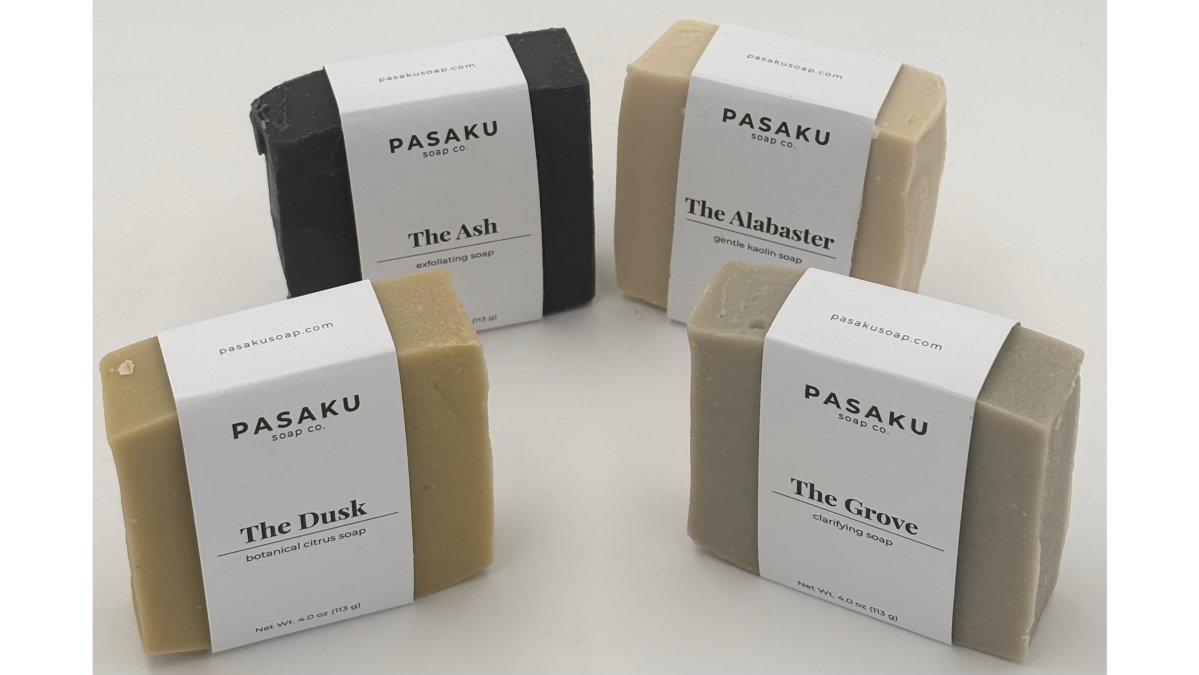
The cost-benefit case for small-batch cold process soap rests on concentration and longevity, not just ingredients. A cured, hard bar lasts longer per use than a soft commercial bar because it dissolves more slowly and holds its shape, so priced per shower the gap narrows considerably. You are also paying for retained glycerin, plant-based oils, and a shorter ingredient list. Consider Pasaku Soap Company's The Soap Trio at $25.00, which lets you build a three-bar routine and test how your skin responds before committing to a full collection.
Sensitive Skin, Hard Water, and Fragrance-Free Options
Sensitive skin and hard water expose a poorly made bar fastest. Hard water minerals react with soap and can form film instead of lather, which is why some people assume natural soap "does not work." A properly superfatted bar with a balanced oil blend still lathers in mineral-heavy water, just with creamier, lower-volume foam. For reactive skin, fragrance is usually the culprit: truly fragrance-free means no essential oils and no synthetic fragrance, not simply "unscented."
- Check the label for "fragrance-free," not "unscented"
- Patch test on your inner forearm for a few days
- Expect creamier, not foamier, lather in hard water
- Store bars dry between uses to protect the formula
Environmental Impact: Biodegradable, Zero-Waste, and Palm-Oil-Free
Environmental impact is where cold process soap separates itself most clearly from bottled body wash. A bar soap is biodegradable by nature, ships without a plastic pump or bottle, and generates no packaging waste at end of life. The EPA's information on reducing plastic waste notes that packaging is a significant share of municipal solid waste, and bar soap sidesteps that stream entirely. Palm-oil-free formulations avoid the deforestation concerns tied to conventional palm production. A zero-waste routine is less about sacrifice and more about swapping one packaged product for a bar that does the same job.
Frequently Asked Questions
Is cold process soap good for sensitive skin?
Cold process soap can be a good fit for sensitive skin because it retains natural glycerin, a humectant that draws moisture to the skin. Many commercial bars strip this out and add synthetic detergents that disrupt the skin barrier. Look for fragrance-free options and check the ingredient list for essential oils if you react to those. Pasaku's cold process bars are formulated without synthetic detergents, and the six-week cure time means a milder, less alkaline bar.
What are the disadvantages of cold process soap?
The main drawbacks are cost and cure time. Cold process bars need four to six weeks to cure, which ties up inventory and raises the price per bar compared to mass-produced soap. They also produce less lather in hard water, and natural colorants can fade over time. Some bars develop soda ash, a harmless white powder on the surface. These trade-offs are the reason small-batch soap costs more, but they also signal a genuinely handcrafted product.
Does cold process soap contain natural glycerin?
Yes. Glycerin is a byproduct of saponification, the chemical reaction between sodium hydroxide and fatty acids. In cold process soap, that glycerin stays in the bar. Commercial soap makers often extract it to sell separately or use it in lotions, which leaves their bars less moisturizing. A small-batch cold process bar preserves the full glycerin content, so it cleans without leaving skin tight or dry.
How do I know the ingredients in small-batch soap are what the maker claims?
Reputable small-batch makers keep records of raw materials and can tell you the exact essential oils, clays, and butters in each bar. If a maker cannot answer basic questions about sourcing or cure time, that is a red flag. Pasaku publishes full ingredient lists and cures every bar for at least six weeks.