

7 Botanical Extract Benefits for Skin Health
Last Updated: November 5, 2026
Quick Summary
Botanical extracts are concentrated compounds drawn from plants, such as polyphenols and flavonoids, that may offer antioxidant and soothing effects on skin. Their benefits depend on concentration, formulation, and how the extract is processed, so results vary between products.
- Polyphenols and flavonoids in plant extracts can act as antioxidants on skin.
- Lab antioxidant activity does not always translate into visible results on the face.
- Most facial benefit evidence comes from leave-on products, not rinse-off cleansers.
- Patch test on the inner forearm or behind the ear for 24 to 48 hours before use.
- Fragrance and essential oils are common causes of irritation in plant-based products.
Table of Contents
- What Botanical Extracts Are and How They Work in Skincare
- Antioxidant and Free-Radical Protection for Skin
- Calming Inflammation and Supporting Sensitive Skin
- Botanical Extracts for Face: Brightening, Texture and Anti-Aging
- Benefits of Botanical Extracts in Skincare for Acne and Oily Skin
- Plant Extract Examples and Their Uses in Skincare
- Safety, Irritation Risk and Evaluating Extract Quality
- Choosing and Using Botanical Products for Your Skin Concern
- Frequently Asked Questions
What Botanical Extracts Are and How They Work in Skincare
Botanical extracts are concentrated compounds drawn from plants, typically through water, alcohol, or oil-based processes that pull out active constituents from leaves, flowers, roots, or fruit. Understanding what these extracts do is part of choosing well. Many people reach for botanical products expecting gentle, natural results, but the mechanism behind those results is worth understanding.
Plant extracts contain groups of compounds such as polyphenols and flavonoids, which are the chemicals that give plants their color and protective properties. When these compounds are formulated into skincare, they can interact with skin in several ways, including antioxidant activity and soothing effects on irritated tissue. Results depend heavily on concentration, formulation, and how the extract is processed.
A practical way to think about it: the extract is one ingredient among many, and the overall formula determines how the skin responds. For a gentler starting point, see our sensitive-skin soap guide.
Antioxidant and Free-Radical Protection for Skin
Antioxidants are compounds that neutralize free radicals, unstable molecules linked to oxidative stress in skin (Free radicals, antioxidants and functional foods: Impact on human health). Many plant extracts contain polyphenols that act as free-radical scavengers, which is why antioxidant claims appear so often in botanical formulations.
The limit to keep in mind is that antioxidant activity measured in a laboratory does not always translate directly into visible results on the face. Formulation stability, the amount of active compound that survives manufacturing, and how long the product stays on skin all shape the outcome. A bar soap also rinses off quickly, so its contribution is generally modest compared with a leave-on product.
Calming Inflammation and Supporting Sensitive Skin
Anti-inflammatory and soothing properties are among the most common reasons people choose botanical formulas, especially those with reactive or sensitive skin. Ingredients such as chamomile and aloe vera are widely used for their calming reputation.
The Alabaster is fragrance-free and plant-based, designed for people who want an uncomplicated cleanse without added scent. Explore the fragrance-free plant-based artisan soap for sensitive skin. Removing fragrance can make it easier to isolate what is causing a reaction when testing how your skin responds to botanicals.

Botanical Extracts for Face: Brightening, Texture and Anti-Aging
Brightening and hyperpigmentation support is a frequent claim for botanical extracts, with some compounds studied for their ability to influence melanin production. Anti-aging and wrinkle-related benefits are also widely discussed, often linked to antioxidant and skin-barrier support.
Be cautious with strong claims. Most evidence for facial benefits comes from concentrated leave-on products, not rinse-off cleansers. Use botanical cleansers as one step in a routine, and expect gradual, modest changes in texture and tone rather than dramatic transformations.
Benefits of Botanical Extracts in Skincare for Acne and Oily Skin
For oily and acne-prone skin, botanical extracts are valued for three distinct jobs: reducing the bacteria associated with breakouts, moderating excess sebum, and calming the inflammation that turns a clogged pore into a red, tender lesion. Each job draws on different plant compounds, and a product that does one well may do the others poorly.
If you have moderate to severe acne, or acne that scars, a dermatologist's guidance matters more than any ingredient list.
Plant Extract Examples and Their Uses in Skincare
Several plant extracts appear across skincare products, each with a different reputation. Green tea is associated with polyphenols, while ginseng and goji berry appear in formulations marketed for skin health.
The Dusk uses lavender and bergamot essential oils for a balanced scent, and The Grove combines eucalyptus, tea tree, and lavender in a blend. Learn about the small-batch botanical ingredients and cold-process method behind our bars. Essential oils are not the same as botanical extracts, and both can irritate sensitive skin, so check ingredient lists carefully.
Common plant extracts and what they are known for
- Green tea: polyphenols and antioxidant activity
- Chamomile: soothing, calming reputation
- Aloe vera: moisturizing and soothing
- Lavender: aromatic, often used for relaxation
- Activated charcoal: cleansing and oil absorption
Safety, Irritation Risk and Evaluating Extract Quality
Botanical does not mean risk-free, and fragrance compounds and essential oils are common reasons a plant-based product can irritate skin. This section covers how to test a product safely, how to read an extract's quality from a label, and how to weigh the evidence behind a claim, three areas most ingredient roundups skip.
The Dusk | Lavender Bergamot Essential Oil Soap →
Patch testing, done properly. Apply a small amount to the inner forearm or behind the ear, leave it on for 24 to 48 hours without washing the area, and check for redness, itching, burning, or swelling. A reaction can be delayed, so a same-day check is not enough. If you are testing a rinse-off cleanser, patch testing is less informative because contact time is short; the more meaningful test is a short trial on the face, one product at a time, over one to two weeks. Stop immediately if burning or swelling develops, and see a dermatologist for a persistent rash.
Who should be cautious. People with known plant allergies (ragweed, daisy family, birch pollen) may cross-react to chamomile, calendula, and other members of the Asteraceae family. Those with eczema or a compromised skin barrier are more prone to stinging and irritation from essential oils and alcohol-based extracts. Anyone using prescription retinoids or exfoliating acids already has a sensitized barrier and should introduce botanicals slowly, one at a time.
Fragrance is the most common culprit. "Fragrance" and "parfum" on a label can each stand for dozens of undeclared compounds, and essential oils are themselves fragrance mixtures. Linalool and limonene, both common in lavender and citrus oils, are recognized fragrance allergens that must be declared in the European Union above certain thresholds; in the United States, labeling rules are less prescriptive, so a product can contain them without calling them out. If your skin is reactive, a fragrance-free formula removes the largest single variable.
Extract quality: what the label can and cannot tell you. Five factors determine whether a botanical does anything:
- Plant part. Chamomile flower and chamomile stem are not equivalent; licorice root and licorice leaf differ in glabridin content.
- Extraction method and solvent. Water, alcohol, glycerin, and oil pull out different compounds. An alcohol tincture and a glycerin extract of the same plant can behave differently on skin.
- Standardization. A standardized extract is adjusted to a marker compound (for example, a stated percentage of polyphenols or of a named active). Standardization improves batch-to-batch consistency; an unstandardized extract can vary widely.
- Concentration. Position on the ingredient list is a rough proxy, ingredients are listed in descending order of weight, though extracts used at 1% or less can appear after the fragrance or preservative.
- Stability. Antioxidant compounds degrade with light, heat, and oxygen. A product in an opaque, air-restricted package preserves them better than a clear jar.
Evidence quality: separate the lab from the face. Most botanical claims rest on one of three tiers. In vitro studies (cell cultures, petri dishes) show a compound can do something, not that a finished product does. Animal studies add context but do not always translate. Human clinical trials on the finished formula are the strongest evidence, and they are the least common. When a brand cites "studies show," ask whether the study used the same extract, at the same concentration, in the same base. A common pattern is that the research used a concentrated extract in a leave-on vehicle, while the product is a rinse-off cleanser with a fraction of the dose.
Sourcing and sustainability. Plant-derived ingredients carry environmental trade-offs that ingredient lists rarely mention. Overharvesting of wild plants, monoculture farming, and long supply chains can undercut the "natural" appeal. Look for companies that name the plant's origin, describe harvesting practices, and publish sourcing information; third-party certifications for organic or sustainably wildcrafted material add a layer of verification, though they are not a guarantee of efficacy.
Watch out: "chemical-free" and "toxin-free" are meaningless on a label, water is a chemical, and every plant extract is a mixture of chemicals. Judge a product by its specific ingredients, its evidence, and how your own skin responds, not by the absence claims on the front of the package.
The article lists five factors that determine whether a botanical extract does anything on the skin.
| Factor | What it means | Why it matters |
|---|---|---|
| Plant part | Flower, stem, leaf or root differ | Chamomile flower and stem are not equivalent |
| Extraction method | Water, alcohol, glycerin or oil | Each pulls out different compounds |
| Standardization | Adjusted to a marker compound | Improves batch-to-batch consistency |
| Concentration | Listed in descending order of weight | Extracts at 1% or less may appear late |
| Stability | Degrades with light, heat and oxygen | Opaque, air-restricted packs preserve them better |
Choosing and Using Botanical Products for Your Skin Concern
Start with your main concern: sensitivity, oiliness, or general hydration. For sensitive skin, a fragrance-free option such as The Alabaster reduces variables. For oily or congested skin, an exfoliating bar like The Ash may suit you better. For a calming ritual, The Dusk offers a lavender-bergamot profile.
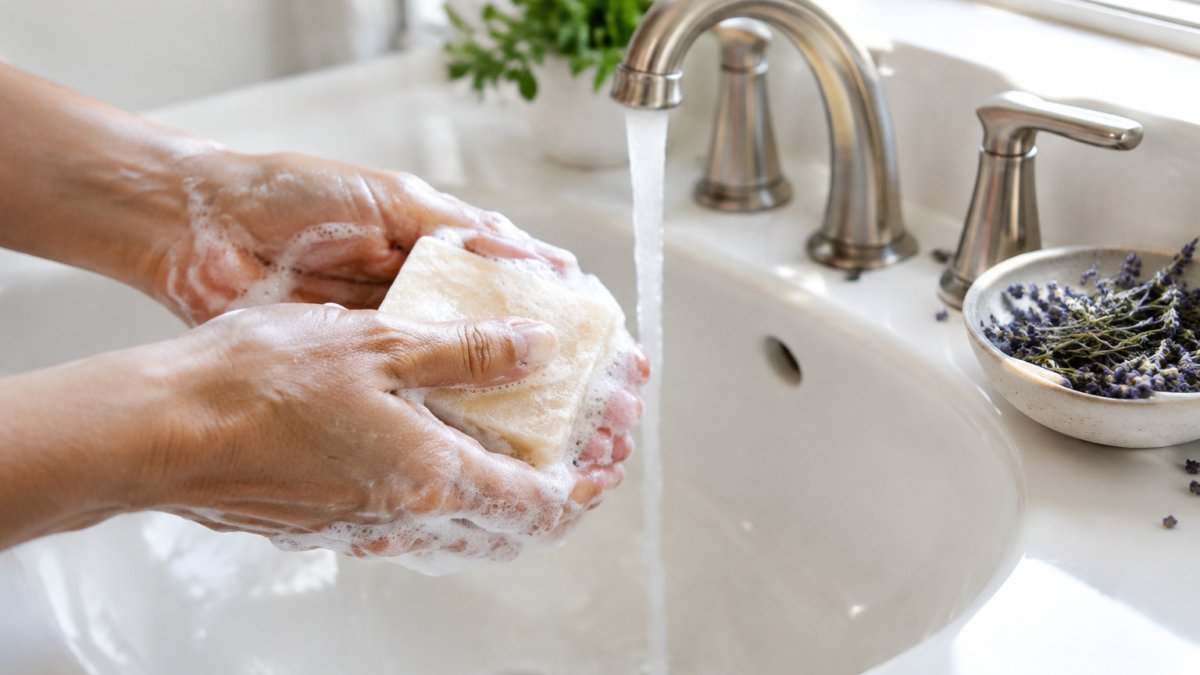
Layer products thoughtfully. Botanical cleansers work best alongside a moisturizer, and introducing one new product at a time makes it easier to identify what helps or irritates. If you use prescription actives such as retinoids or acids, check with a dermatologist before adding strong botanicals to the same routine.
Our bars are priced at $9.00 each, so you can test a few before committing to a full routine. Pick one concern, use one bar consistently for several weeks, and judge results by how your skin feels rather than by promises on the label.
Frequently Asked Questions
What does botanical extract do to skin?
Botanical extracts are concentrated compounds from plants, such as polyphenols and flavonoids, that are added to skincare for specific effects. Many contain compounds such as polyphenols, and some, such as chamomile and aloe vera, are known for their soothing reputation. Their effects depend on the extract, its concentration and the formula it sits in, so results vary from product to product.
Which botanical extracts are commonly used for acne-prone skin?
Botanical ingredients often found in products for oily skin include tea tree and green tea. Botanicals are not a replacement for treatments recommended by a dermatologist for moderate or severe acne.
Are botanical extracts safe for sensitive skin?
Plant-derived ingredients can still irritate or trigger allergic reactions, especially in people with sensitive skin. Essential oils and some concentrated extracts are the most common culprits. Patch test any new product on a small area of skin for several days before full use, and choose formulas with short, simple ingredient lists if you react easily.
Are botanical extracts different from essential oils?
Yes. Botanical extracts are made by drawing active compounds out of a plant, often with water, oil or alcohol, and they may be used in small amounts for conditioning or soothing. Fragrance-free products may still contain plant extracts but no added essential oil scent.
