

7 Steps to Use Cocoa Butter on Skin Without Clogging Pores
Last Updated: November 18, 2026
Quick Summary
Apply a pea-sized amount of cocoa butter to damp skin after cleansing, warming it between your palms first so it spreads easily. It works as a protective barrier that locks in moisture, so reapply through the day for lasting softness.
- Cleanse with a gentle, fragrance-free soap before applying.
- Warm a pea-sized amount between your palms so it spreads smoothly.
- Apply to damp skin, since it seals in the water already present.
- Use less on the face than on the body, where skin is thicker.
- Avoid thick layers on oily skin, because heavy butter can clog pores.
Table of Contents
Cocoa butter is the pale, fatty part of the cacao bean, pressed out during chocolate making. Customers often ask about it when they have dry, tight skin and want something simple and plant-based. Cocoa butter is a fat that softens and seals, so it helps skin hold onto the moisture it already has.
Its main value is as an occlusive emollient. It forms a thin layer over the skin that slows water loss, which is why it feels rich and protective. It also contains fatty acids, including oleic acid, that help the skin feel smooth and supple.
The effect is temporary, though. Reapplying it through the day keeps the barrier working.
- Hydration: locks in moisture already in the skin
- Softness: smooths rough, flaky patches
- Protection: creates a light barrier against drying wind and cold air
Watch out: cocoa butter is heavy. Applied thickly to already oily skin, it can sit on the surface and contribute to clogged pores.
Raw Cocoa Butter for Skin vs. Cocoa Butter Lotion
Raw cocoa butter is pure, solid fat. It melts at body temperature, so it needs warming before use. It is very concentrated, so a little goes a long way. Cocoa butter lotion is the same fat blended with water, oils and emulsifiers. Lotions spread easily and feel lighter, but they contain less cocoa butter by weight.
Which one you choose depends on how dry your skin is and how much effort you want to put in. Raw butter gives the strongest protective layer for very dry spots. A lotion is easier for daily use on large areas.
What You'll Need and How to Melt Solid Cocoa Butter
You need a small amount of raw cocoa butter, clean dry hands, a clean jar and a towel.
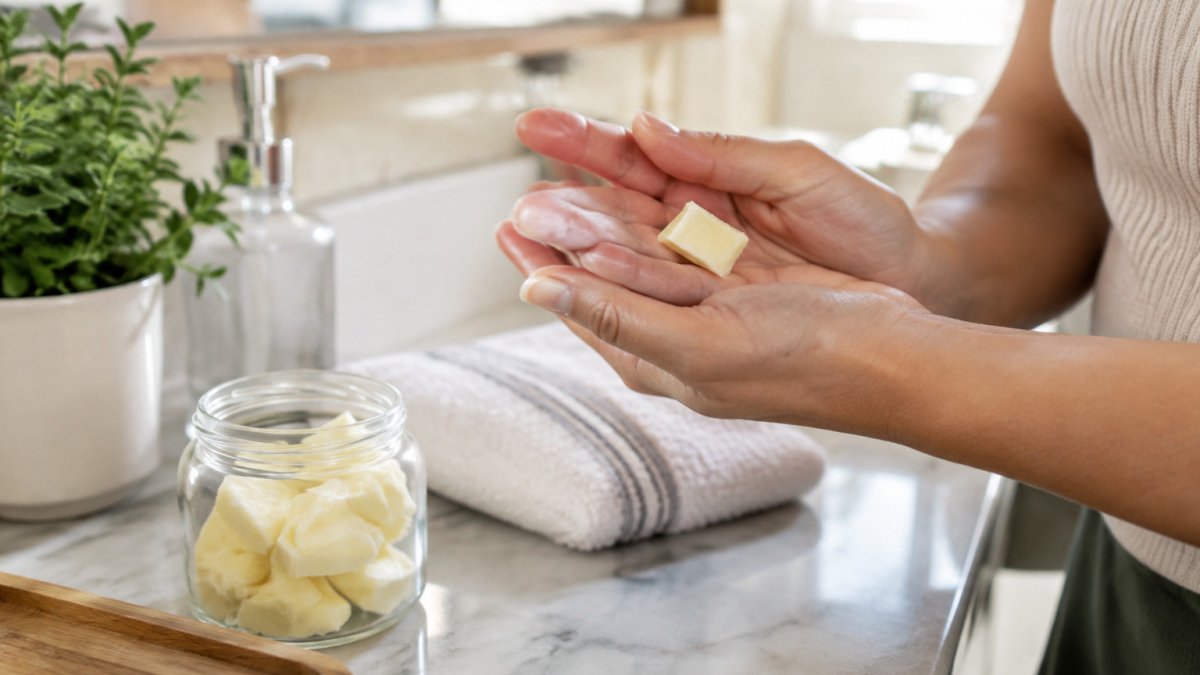
To melt it, rub a small piece between your palms for about 30 seconds. The warmth of your hands softens it into an oil. Alternatively, place the jar in a bowl of warm (not hot) water for a few minutes. Test the temperature on your wrist before using it.
Step-by-Step: How to Apply Cocoa Butter on Dry Skin, Face and Body
Follow these steps for the best results:
- Cleanse the area with a gentle, fragrance-free soap.
- Pat the skin until it is just damp, not dripping wet.
- Warm a pea-sized amount of cocoa butter between your palms.
- Smooth it onto dry patches using slow, circular motions.
- Press gently so the skin absorbs it, rather than rubbing hard.
- Use less on the face and more on the body, where skin is thicker.
- Wait a few minutes before dressing so it does not transfer to fabric.
On damp skin the butter spreads more easily and seals in the water already present. Applying it to damp skin after a bath or shower is a common approach.
How to Use Cocoa Butter on Skin Every Day and at Night
For daily use, apply a thin layer after showering, when skin is still slightly damp. A lighter application works well in the morning, especially under clothing. At night, you can use a thicker layer on dry areas, since you are not going out and it has time to absorb.
Many people use cocoa butter as a night treatment on hands, feet and elbows. Put on cotton socks or gloves afterward to protect bedding. Some people also add it to their bath routine, letting a small piece melt in warm bathwater.
How to Use Cocoa Butter on Skin for Acne and Sensitive Skin
Patch test on a small spot first, and watch for redness or new bumps over a few days. If your skin is sensitive, you can explore gentle cleansing options that complement cocoa butter without irritating or clogging pores.
If irritation appears, stop using the product and consider speaking with a dermatologist.
Tips, Mistakes to Avoid, and Realistic Expectations for Scars and Stretch Marks
A common mistake is using too much at once. A thick layer can feel greasy and leave residue. Start small and build up.
Another mistake is applying it to dirty skin. Cleanse first so you are not sealing in dirt.
Do not expect cocoa butter to remove scars or stretch marks. Treat it as a moisturizer, not a treatment (the American Academy of Dermatology).
Choosing a Cocoa Butter Product for Your Routine
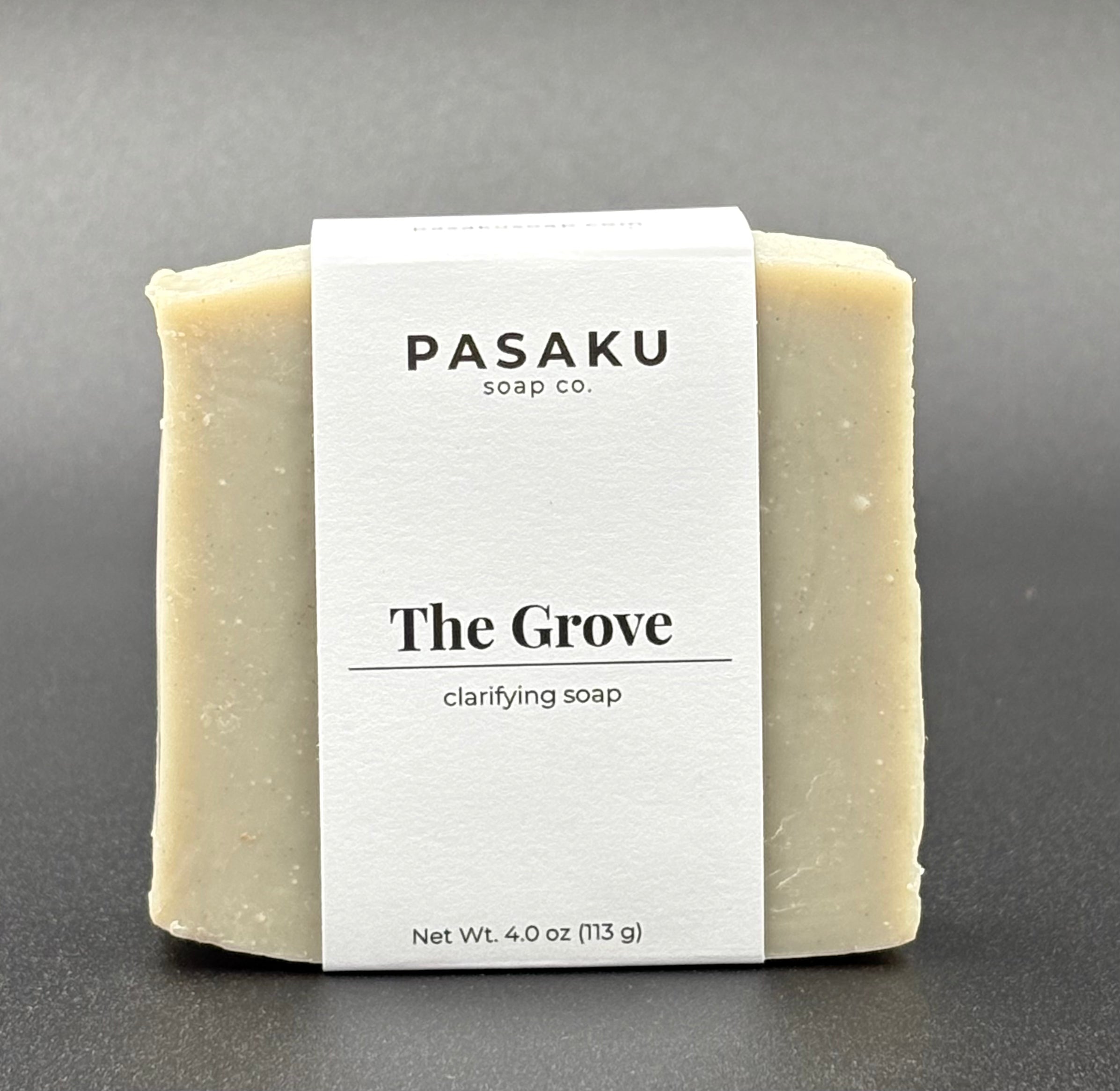
If you want a simple, fragrance-free option for your skin, our handcrafted soap line is a good place to start. You can browse The Grove to see a moisturizing product that fits this approach. Pasaku Soap Company makes hand-poured artisan soaps in small batches.
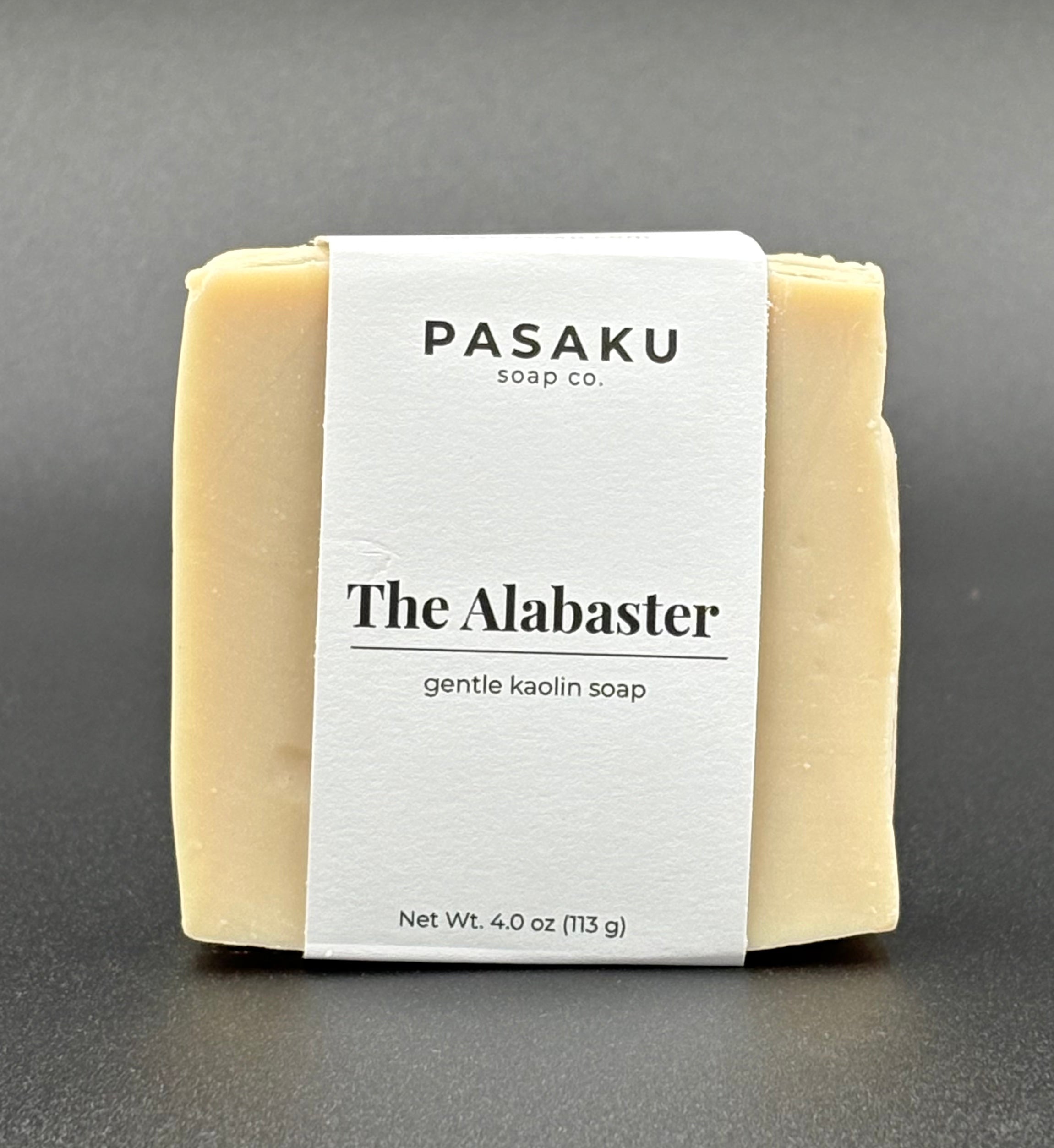
Pair a gentle cleanser with a richer moisturizer for the best results. If you are comparing options, you can look at The Alibaster as another possible daily or nighttime moisturizer.
For current prices and availability, check the Pasaku Soap Company website.
Frequently Asked Questions
Can you use cocoa butter on your face every day?
Many people use cocoa butter on their face daily, especially on dry skin. Start with a pea-sized amount applied to slightly damp skin, use it at night first, and watch for clogged pores, breakouts, or irritation over a couple of weeks. If your skin reacts, switch to a lighter product or reduce how often you apply it. A patch test on the jawline for several days before full-face use is a sensible precaution, especially for sensitive skin.
Can cocoa butter help with acne?
Cocoa butter is not an acne treatment. Some people with dry, flaky skin find it comforting, but if you have active acne, consider a lighter moisturizer. If acne is persistent or painful, a dermatologist can recommend treatments that have evidence behind them.
Is it good to rub cocoa butter on your face?
Rubbing cocoa butter on your face can work for dry or very dry areas such as around the nose, cheeks, or lips, but applying it lightly is more effective than heavy massage. Warm a very small amount between your fingers and press it into skin with gentle strokes. Avoid the eye area unless you have used it there before without irritation, and skip the face if you have oily or breakout-prone skin.
What is the disadvantage of cocoa butter for skin?
Cocoa butter is a rich fat and can feel heavy on some skin types. Some people also experience irritation or allergic reactions, so a patch test is recommended before wider use. Cocoa butter works as a surface moisturizer rather than a treatment for deeper concerns like scars.
