

7 Proven Benefits of Hemp Seed Oil for Skin
Quick Summary
Hemp seed oil is a cold-pressed oil from cannabis sativa seeds that helps skin retain moisture and supports the skin barrier. It is a moisturizer, not a treatment for conditions like eczema, psoriasis, or acne. It contains little to no cannabidiol.
- Hemp seed oil is high in linoleic acid, an omega-6 fatty acid that is part of the skin barrier.
- Use two to four drops warmed between palms, applied to damp skin once or twice a day.
- Patch test on the inner forearm or behind the ear, and check at 24 and 48 hours.
- Store the oil in a cool, dark place with the cap tightly closed to slow oxidation.
- Check the label for hemp seed oil rather than hemp extract or CBD if cannabinoid content matters.
Table of Contents
- What Hemp Seed Oil Is and How It Differs From CBD Oil and Hemp Extract
- 7 Benefits of Hemp Seed Oil for Skin, Explained
- What the Evidence Shows and Where It Falls Short
- How to Use Hemp Seed Oil for Skin: A Step-by-Step Routine
- Hemp Seed Oil for Sensitive Skin: Patch Testing, Irritation and Safety
- Choosing the Best Hemp Seed Oil for Skin: Quality, Storage and Oxidation
- Hemp Seed Oil Skin Before and After: Setting Realistic Expectations
- Booking Your Next Step: Trying Pasaku's Hand-Poured Soaps With Your Routine
- Frequently Asked Questions
What Hemp Seed Oil Is and How It Differs From CBD Oil and Hemp Extract
Last Updated: November 20, 2026
Hemp seed oil is a pressed oil made from the seeds of the cannabis sativa plant, and it is cold-pressed rather than extracted from the flowers or leaves. Understanding what goes into skincare helps you choose better. The confusion starts with the naming, because "hemp" appears on everything from seed oil to full-spectrum extracts.
Hemp seed oil contains very little cannabidiol. It is valued for its fatty acid profile, which includes linoleic acid (an omega-6 fatty acid) and alpha-linolenic acid (an omega-3).
CBD oil is different. It is derived from the flowers and leaves of the plant, where cannabinoids concentrate, and it is usually diluted into a carrier oil. Hemp extract sits between the two, often containing cannabinoids along with other plant compounds. When you read a product label, the ingredient name tells you which of these you are buying, and the presence of "hemp seed oil" alone does not indicate cannabinoid content.
Watch out: a label that says "hemp" does not tell you whether it contains CBD. Check the ingredient list for "hemp seed oil" versus "hemp extract" or "CBD," and ask the seller for a certificate of analysis if cannabinoid content matters to you.
7 Benefits of Hemp Seed Oil for Skin, Explained
Hemp seed oil is most often discussed for its effects on moisture, the skin barrier and irritation. Below are the benefits that come up most often, and how each one works in practice.
Hydration and Moisture Retention
The fatty acids in hemp seed oil help the skin hold water. A moisturizing layer slows evaporation from the surface, which is why dry skin often feels tight after cleansing. For people using a bar soap, a light oil afterward can offset the drying effect that many cleansers produce.
Skin Barrier Support
The outermost layer of skin depends on lipids to stay intact. Linoleic acid is one of the fatty acids that makes up that barrier. Applying an oil rich in these lipids is one way to support the barrier, though it does not repair damage the way a prescription treatment would.
Soothing Irritation and Inflammation
The evidence here is largely indirect, so treat it as a comfort measure rather than a treatment.
What the Evidence Shows and Where It Falls Short
Most of the claims about hemp seed oil rest on the composition of the oil and on general knowledge of how fatty acids behave in skin, not on large human trials of the oil itself. That distinction matters, because the strength of the evidence varies sharply by claim, and readers deserve to know which is which.
What is reasonably well established. The fatty acid profile of hemp seed oil is not in dispute. It is high in linoleic acid (an omega-6) and alpha-linolenic acid (an omega-3), with smaller amounts of oleic acid and gamma-linolenic acid. The general role of linoleic acid in the skin barrier is well described in dermatology literature: it is a component of ceramides in the outermost skin layer, and low linoleic acid levels in skin lipids are associated with a weaker barrier. What follows from that is modest but real, an oil rich in linoleic acid can soften dry skin and slow water loss from the surface. That is a moisturization claim, not a treatment claim, and it is the most defensible one in this article.
What is not supported. Hemp seed oil is not a treatment for eczema, psoriasis, or acne, and it does not replace prescription topicals. It contains little to no cannabidiol, so any claim that hemp seed oil delivers CBD's effects is a category error, the cannabinoids concentrate in the flowers and leaves, not the seeds. It is also not a substitute for sunscreen, and no topical oil reverses photoaging.
How to weigh what you read. A common pattern in marketing is to cite a laboratory or animal study as if it were a human trial, or to describe a general property of fatty acids as if it were a measured result for the product. When you see a specific claim, look for the study type: human trials on the finished oil are the strongest, followed by human trials on individual fatty acids, then animal studies, then cell-culture work, then anecdote. Most of what you will find sits in the last three categories. That does not make the oil useless, it makes it a good moisturizer with an honest ceiling on what it can do.
Watch out: a label or product page that promises to "treat eczema" or "clear acne" is overstating what the product can do. If a product makes disease-treatment claims, that is a reason for caution, not confidence.
How to Use Hemp Seed Oil for Skin: A Step-by-Step Routine
Applying hemp seed oil works best on skin that is still slightly damp. Use a few drops, warm them between your palms, and press them into the face or body. Start with a small amount on one area to check for reaction before using it everywhere.
- Cleanse with a gentle, fragrance-free soap, such as a plant-based bar.
- Pat skin until it is still damp, not dripping wet.
- Warm two to four drops of oil between your palms.
- Press the oil into the skin in upward strokes.
- Use it once or twice a day, depending on how dry your skin feels.
A common mistake is using too much oil. A thin layer absorbs better, and excess oil can sit on top of the skin and feel greasy.
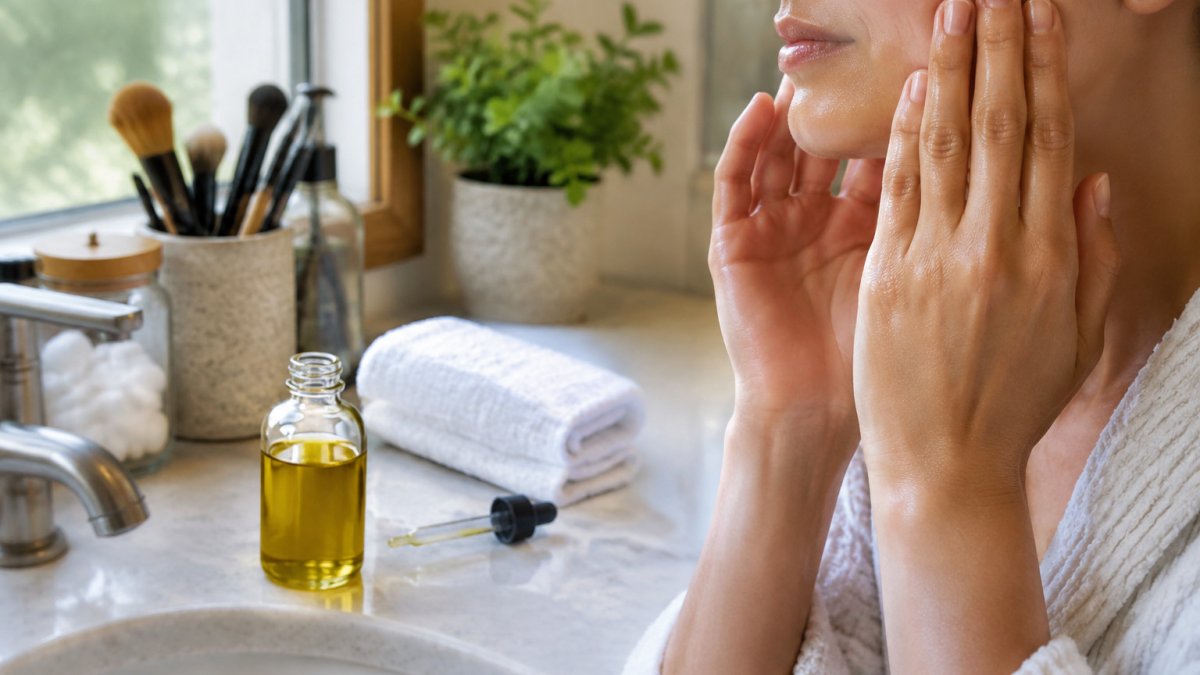
Here is the routine at a glance, with the timing for each step so you can follow it without rereading the article.
| Step | What to do | Time or frequency |
|---|---|---|
| Cleanse | Use a gentle, fragrance-free soap | Before applying oil |
| Pat dry | Leave skin still slightly damp | Before applying oil |
| Warm the oil | Use two to four drops between palms | Each application |
| Apply | Press into skin in upward strokes | Once or twice a day |
Hemp Seed Oil for Sensitive Skin: Patch Testing, Irritation and Safety
Sensitive skin is not one condition. It can mean a compromised barrier that stings easily, a history of contact allergy, rosacea that flushes with many products, or skin that breaks out from rich textures. Hemp seed oil suits some of these and not others, so the practical question is not "is it safe?" but "is it safe for this skin, used this way?"
Patch test method. Do this before the first facial use, and again with any new bottle or brand, because formulations and freshness vary.
- Choose a test site: the inner forearm is standard; behind the ear is a common alternative for facial products.
- Wash the area with a mild, fragrance-free cleanser and pat dry.
- Apply one or two drops of the oil to a small area about the size of a coin, and let it absorb without rubbing it in hard.
- Leave it uncovered and do not wash the area for 24 hours.
- Check at 24 hours and again at 48 hours. Look for redness, swelling, itching, stinging, or a rash.
- If there is no reaction, the oil is reasonable to try on the face, start with a small area such as the jawline for a few days before applying it more broadly.
A 24-to-48-hour window catches most irritant reactions and many allergic ones, but not all. A true allergic contact dermatitis can take several days to appear on first exposure, so if you have a known allergy to plants in the cannabis family, skip the oil entirely rather than testing it.
Signs to stop using it. Stop and wash the area with lukewarm water if you see spreading redness, raised or weeping bumps, hives, or swelling beyond the test site. Stop if stinging lasts more than a few minutes after application, since that usually signals a barrier that is already irritated.
Acne-prone and congested skin. Hemp seed oil is often described as low on the comedogenic scale, but comedogenic ratings are rough guides derived from rabbit-ear and lab models, not guarantees for human faces. Some people with oily or acne-prone skin tolerate it well; others find that any oil-rich layer, especially a heavy one, precedes breakouts.
Reactive and barrier-compromised skin. If your skin stings from water or from products that used to be fine, the barrier is likely compromised. In that state, fewer ingredients is better: a plain moisturizer with ceramides and a gentle cleanser may do more than adding an oil. Hemp seed oil can be reintroduced once the stinging settles.
Allergies and cross-reactivity. People with allergies to cannabis-family plants, or with multiple existing plant allergies, are more likely to react. If you have had contact dermatitis from other botanical oils, treat hemp seed oil as a likely candidate rather than an exception.
Watch out: "natural" and "plant-based" do not mean hypoallergenic. Botanical oils can cause contact dermatitis, and a reaction can appear on the second or third use rather than the first, which is why a single patch test is a starting point, not a permanent clearance.
Choosing the Best Hemp Seed Oil for Skin: Quality, Storage and Oxidation
Look for cold-pressed oil in a dark or opaque container. Light and heat speed up oxidation, which degrades the fatty acids and can change the smell. Oil that smells rancid or paint-like has likely gone off and should be discarded.
Store the oil in a cool, dark place and keep the cap tightly closed. Buying smaller bottles means you use the oil before it has time to degrade.
Hemp Seed Oil Skin Before and After: Setting Realistic Expectations
If a condition does not improve, see a dermatologist.
Booking Your Next Step: Trying Pasaku's Hand-Poured Soaps With Your Routine
If you want a gentle, plant-based cleanser to start your routine, the The Grove from Pasaku Soap Company is a hand-poured bar to consider. For guidance on choosing a gentle soap for reactive skin, see our best natural soap for sensitive skin guide. To understand who makes the soap and how it is handcrafted, read about Pasaku Soap Company.
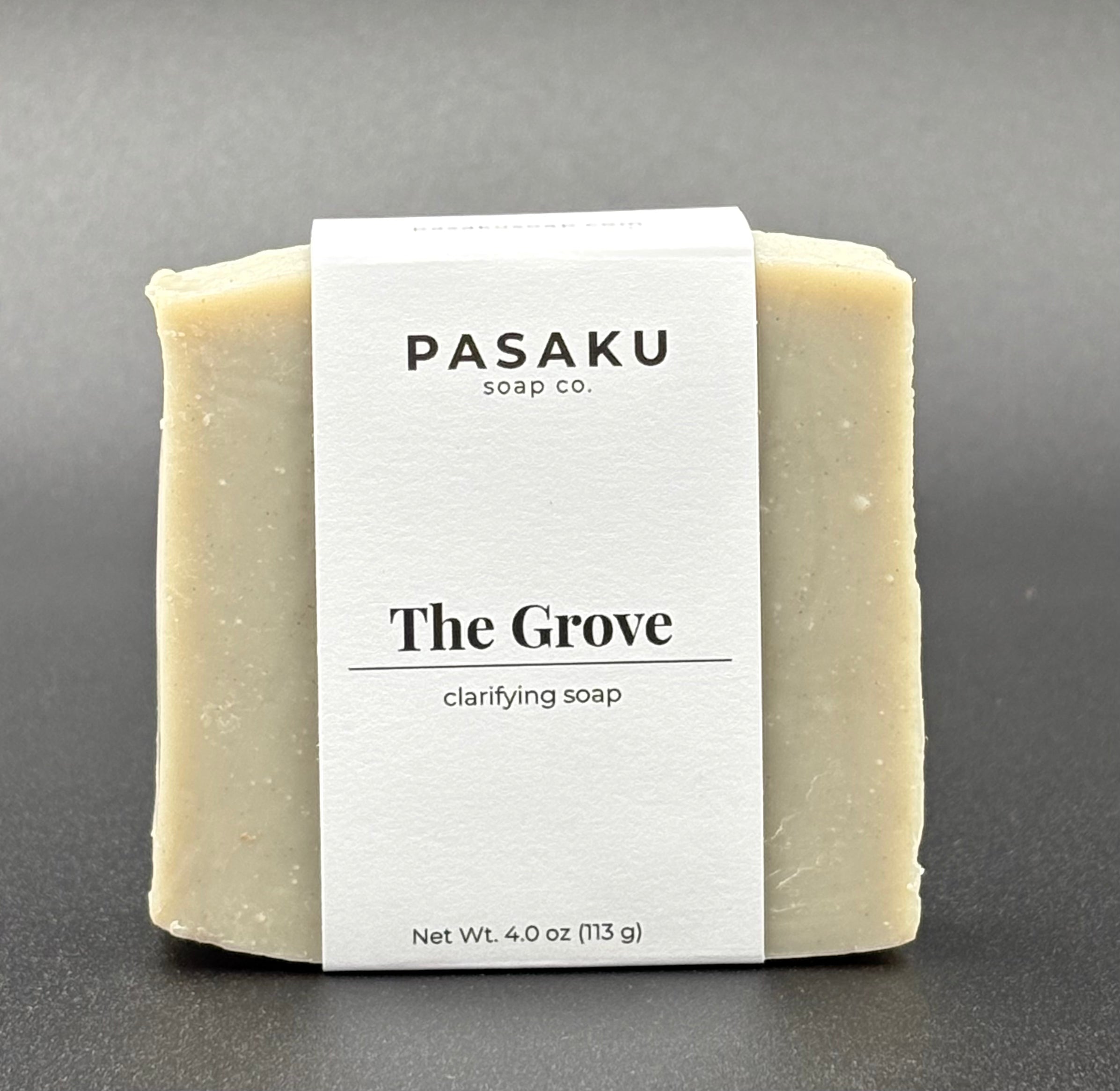
Pasaku Soap Company hand-pours small batches of artisan soap in Wylie, TX. Patch test any new product first, and give your skin a few weeks to show you what works.
Frequently Asked Questions
Is hemp seed oil good for dry or sensitive skin?
For sensitive skin, results vary. Because it is a botanical oil, some people still react to it. Patch test a small area on the inner forearm or jawline for several days before applying it to your face. Stop using it if you notice redness, itching or stinging.
Can hemp seed oil help with eczema or acne?
Hemp seed oil is not a treatment for eczema, psoriasis or acne. Oily or acne-prone skin may react poorly to heavy oils, so start with a small amount. If a condition is painful, spreading or not improving, see a dermatologist for evaluation and treatment.
How long does hemp seed oil take to work on skin?
Keep a simple log of how your skin looks and feels each week so you can judge progress objectively.
Is hemp seed oil the same as CBD oil?
No. Hemp seed oil is cold-pressed from the seeds of the hemp plant and contains little to no cannabidiol. CBD oil is typically extracted from the flowers, leaves and stalks and contains cannabidiol. Hemp seed oil is valued for its fatty acid profile, while CBD products are marketed for their cannabinoid content. Check the product label, since some products blend or label these ingredients differently.
