

How to Wash Your Face With Sensitive Skin Gently
Quick Summary
To wash face sensitive skin gently, use lukewarm water, a pea-sized amount of fragrance-free cleanser, and fingertips in slow circles for 30 to 60 seconds. Rinse well, pat dry with a soft cotton towel, and apply moisturizer while skin is still damp.
- Use lukewarm water, never hot, and test it on your wrist first.
- Apply a pea-sized amount of cleanser, about 1/8 teaspoon.
- Massage with fingertips for 30 to 60 seconds, avoiding scrubbing.
- Pat dry with a clean, soft towel and moisturize within 60 seconds.
- Patch test any new cleanser for 24 hours before full use.
Table of Contents
- Why Washing Sensitive Skin Needs a Different Approach
- Choosing a Gentle Cleanser for Sensitive Skin
- Patch Testing and Introducing a New Cleanser Gradually
- Step-by-Step Face Washing Routine for Sensitive Skin
- How Often to Wash Your Face and Removing Sunscreen and Makeup
- When Cleansing Causes Burning, Redness, or a Rash
- Booking Your Gentle Cleansing Routine With Pasaku
- Frequently Asked Questions
Why Washing Sensitive Skin Needs a Different Approach
Last Updated: October 29, 2026
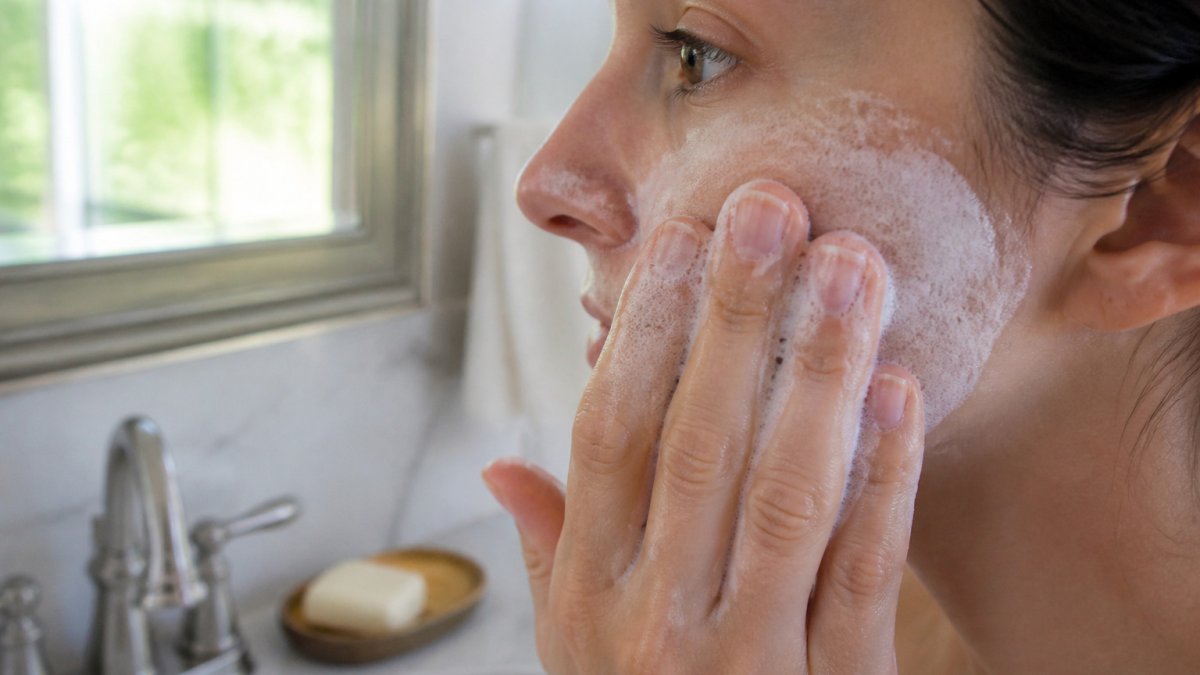
Sensitive skin reacts to things that normal skin shrugs off. Hot water, a foamy cleanser, or a rough towel can leave it tight, red, or itchy within minutes. Knowing how to wash face sensitive skin gently is less about buying the right product and more about changing how you use water, hands, and time.
The skin on your face is thinner than the skin on your body. Its outer layer, called the skin barrier, holds moisture in and keeps irritants out. When that barrier is weak, cleansing can strip away oil and leave the skin exposed. So the goal is clean skin that still feels comfortable afterward.
Here's the core idea: gentle means less friction, less heat, and less time with harsh ingredients. Most irritation comes from doing too much, not from one bad product.
- Use lukewarm water, never hot
- Choose a cleanser without heavy fragrance or harsh detergents
- Wash with your fingertips, not a scrubbing tool
- Rinse and pat dry instead of rubbing
Choosing a Gentle Cleanser for Sensitive Skin
A gentle cleanser for sensitive skin is mild, fragrance-free, and free of alcohol. Look for simple ingredient lists with few additives. Fragrance and alcohol are the two ingredients most often linked to stinging and dryness, so start by checking for them.
If you want a plant-based option, The Alabaster | Unscented Plant-Based Artisan Soap is fragrance-free and formulated with shea butter, olive oil, and white kaolin clay for a mild, creamy lather. It's priced at $9.00.

What to look for on the label:
- No added fragrance or essential oils if you react to scent
- No alcohol-based formulas that feel drying
- A short ingredient list you can actually read
- A texture that feels soft, not squeaky
Many people with reactive skin assume "natural" means safe. Plant-based ingredients can still irritate. Test any product before you commit to daily use.
Patch Testing and Introducing a New Cleanser Gradually
Before you use a new cleanser on your whole face, patch test it. This is one of the most skipped steps, and it's the one that prevents most bad reactions.
- Apply a small amount to a discrete area, such as behind the ear or along the jawline.
- Wait 24 hours. Watch for redness, itching, tingling, or bumps.
- If the spot stays calm, use the product on one side of your face for three to four days.
- If that goes well, move to your full face, once a day, for a week.
- Only then move to twice a day if your skin feels good.
Introducing a new product slowly makes it easier to find the cause if something goes wrong. Change one product at a time. If you start three new things in one week, you won't know which one caused the trouble.
Watch out: Don't stop the test just because the product feels good the first day. Some irritation shows up after several uses, not right away.
Step-by-Step Face Washing Routine for Sensitive Skin
A clear routine removes the guesswork. The sequence below is built around three principles: keep contact time short, keep friction low, and keep water lukewarm. Follow it morning and evening, adjusting only the cleanser step based on how your skin feels.
- Wet your face with lukewarm water (about 10 seconds). Test the water on the inside of your wrist first. If it feels hot there, it is too hot for your face. Aim for water that feels neutral to slightly cool.
- Dispense a pea-sized amount of cleanser (about 1/8 teaspoon). For a bar, wet the bar and work a light lather in your palms for 5 to 10 seconds before touching your face. For a liquid cleanser, one pump is usually enough. More product does not mean cleaner skin; it means more residue to rinse.
- Massage with fingertips for 30 to 60 seconds. Use small, slow circles. Avoid the eye area and any active breakouts. Do not scrub, and do not re-lather mid-wash.
- Rinse thoroughly with lukewarm water for about 15 seconds. Pay attention to the hairline, jawline, and sides of the nose, where residue tends to collect. Residue left on the skin is a common cause of post-wash tightness and itching.
- Pat dry with a clean, soft cotton towel. Press the towel to your skin rather than dragging it. Leave the skin slightly damp.
- Apply a fragrance-free moisturizer within 60 seconds, while skin is still damp. This locks in hydration and supports the skin barrier.
Morning Versus Evening: Adjust the Routine, Not the Principles
- Morning: If your skin feels dry or tight when you wake up, skip the cleanser and rinse with lukewarm water only. If it feels oily, use the pea-sized amount of cleanser as above. Either way, follow with moisturizer and sunscreen.
- Evening: This is the cleanse that matters most because it removes sunscreen, makeup, and pollution. Use the full routine. If you wore heavy sunscreen or makeup, see the removal guidance in the next section rather than washing twice.
Water Temperature and Contact Time
Water that feels warm on your hands can still be too hot for your face. Lukewarm water rinses cleanser off without stripping oils. Contact time matters too: leaving cleanser on for several minutes does not clean better, it just gives irritants more time to work. A 30 to 60 second massage is enough for most routines.
- Keep showers and face rinses short, around a few minutes
- Don't let cleanser dry on your skin
- Avoid repeated re-lathering, which adds friction
Washing With Hands or a Washcloth
Your fingertips are the gentlest tool you have. They remove dirt and makeup with light pressure and don't rub the skin raw. Washcloths can work, but only if they're soft and clean. Rough towels, loofahs, and cleansing brushes create friction that irritates sensitive skin. If you use a cloth, rinse it well, use a fresh one often, and press rather than scrub.
The Alabaster | Unscented Plant-Based Artisan Soap →
Many people find that washing with hands feels best.
The routine below breaks the washing process into six steps, each with a time or amount to follow.
| Step | What to do | Time or amount |
|---|---|---|
| Wet face | Use lukewarm water | About 10 seconds |
| Apply cleanser | Use a pea-sized amount | About 1/8 teaspoon |
| Massage | Use fingertips in small, slow circles | 30 to 60 seconds |
| Rinse | Use lukewarm water, focusing on hairline, jawline and nose sides | About 15 seconds |
| Dry | Pat dry with a clean, soft cotton towel | Leave skin slightly damp |
| Moisturize | Apply fragrance-free moisturizer while skin is damp | Within 60 seconds |
How Often to Wash Your Face and Removing Sunscreen and Makeup
Most people with sensitive skin do well washing their face twice a day, once in the morning and once at night, since a wash face sensitive skin routine works best with consistent timing. Morning washing clears overnight oil and sweat. Evening washing removes sunscreen, makeup, and pollution.
Here's how to handle each one without over-cleansing:
- Morning: Rinse with water, then use a gentle cleanser if your skin feels oily. Skip cleanser on very dry mornings.
- Evening: Remove sunscreen and makeup first, then cleanse once. Don't cleanse three or four times trying to get everything off.
For makeup and sunscreen, use a gentle method. Press a soft cloth or a fragrance-free cleansing product onto the area for a few seconds, then wipe gently. Follow with your regular wash.
Common mistake: Washing too often. Cleansing more than twice a day usually leaves skin tighter and more reactive, even when the product is gentle.
When Cleansing Causes Burning, Redness, or a Rash
Some mild sensitivity after a new product is normal for a day. Burning that lasts, redness that won't fade, or a rash is a sign to stop. The harder question is whether you are dealing with sensitive skin or something that needs medical care. The two can look alike, but they call for different responses.
Stop-Use Protocol
- Stop using the product right away. Do not try it again "just to be sure."
- Rinse your face with cool water and pat dry. Skip cleanser for 24 to 48 hours; rinse with water only.
- Apply a plain, fragrance-free moisturizer. Avoid actives, exfoliants, and anything with fragrance or essential oils until the skin settles.
- Avoid new products until your skin returns to baseline, usually within a few days.
- If redness, burning, swelling, or a rash continues for more than a few days, spreads, or is accompanied by blisters or oozing, see a doctor or dermatologist.
Sensitive Skin Versus Rosacea and Eczema
General sensitive skin reacts to products and environmental triggers but returns to normal when the trigger is removed. Two common conditions can look similar but behave differently:
- Rosacea typically causes persistent redness across the cheeks, nose, chin, and forehead, sometimes with visible blood vessels, flushing, or acne-like bumps. It is often triggered by heat, sun, spicy food, and alcohol. Cleansing should be extra gentle, and a dermatologist can recommend prescription options if over-the-counter care is not enough.
- Eczema (atopic dermatitis) causes dry, itchy, inflamed patches that may crack or weep. It often flares in cycles and can be triggered by soaps, fragrances, and temperature changes. Fragrance-free cleansers and thick moisturizers are standard, but persistent flares usually need a clinician's care.
A simple rule: if redness or irritation appears only after a specific product and fades when you stop, product sensitivity is likely. If redness, itching, or flaking persists for weeks regardless of what you use, or if you notice visible blood vessels or recurring rashes, see a dermatologist. Only a clinician can tell these conditions apart.
Don't keep using a product that's causing pain.
Booking Your Gentle Cleansing Routine With Pasaku
Gentle washing is simple once you know the steps: lukewarm water, a mild cleanser, fingertip pressure, and a soft towel. Start with one product, test it on a small area, and build your routine slowly.
Frequently Asked Questions
Is it better to wash my face with hands or a washcloth?
For sensitive skin, clean fingertips are usually the gentler choice. A washcloth can add friction and hold bacteria, especially if it is rough or not washed often. If you use a cloth, choose a soft, clean one and replace it regularly. Either way, use light pressure, avoid scrubbing, and pat your face dry with a soft towel rather than rubbing it.
How often should you wash your face if you have sensitive skin?
Most people with sensitive skin do well cleansing twice a day, once in the morning and once in the evening. Washing in the morning removes oils and sweat that built up overnight, while the evening wash removes sunscreen, makeup, and daytime grime. If your skin feels tight or irritated, cut back to once a day, especially if you are using a stronger product or going out in the sun often.
What water temperature is best for washing sensitive skin?
Lukewarm water is best. Hot water strips natural oils and can worsen redness and dryness, while very cold water may not rinse cleanser fully. Rinse for about 30 seconds with lukewarm water, then pat dry. If you notice stinging or flushing after washing, lower the temperature further and check whether your cleanser contains fragrance or alcohol.
Can fragrance-free soap help with eczema-prone skin?
Fragrance-free, gentle cleansers are often recommended for eczema-prone skin because fragrance is a common irritant. A fragrance-free formula alone does not treat eczema, though. If you have eczema, rosacea, or persistent redness, or if symptoms do not improve after a few weeks of gentle washing, see a dermatologist for an accurate diagnosis and treatment plan.
